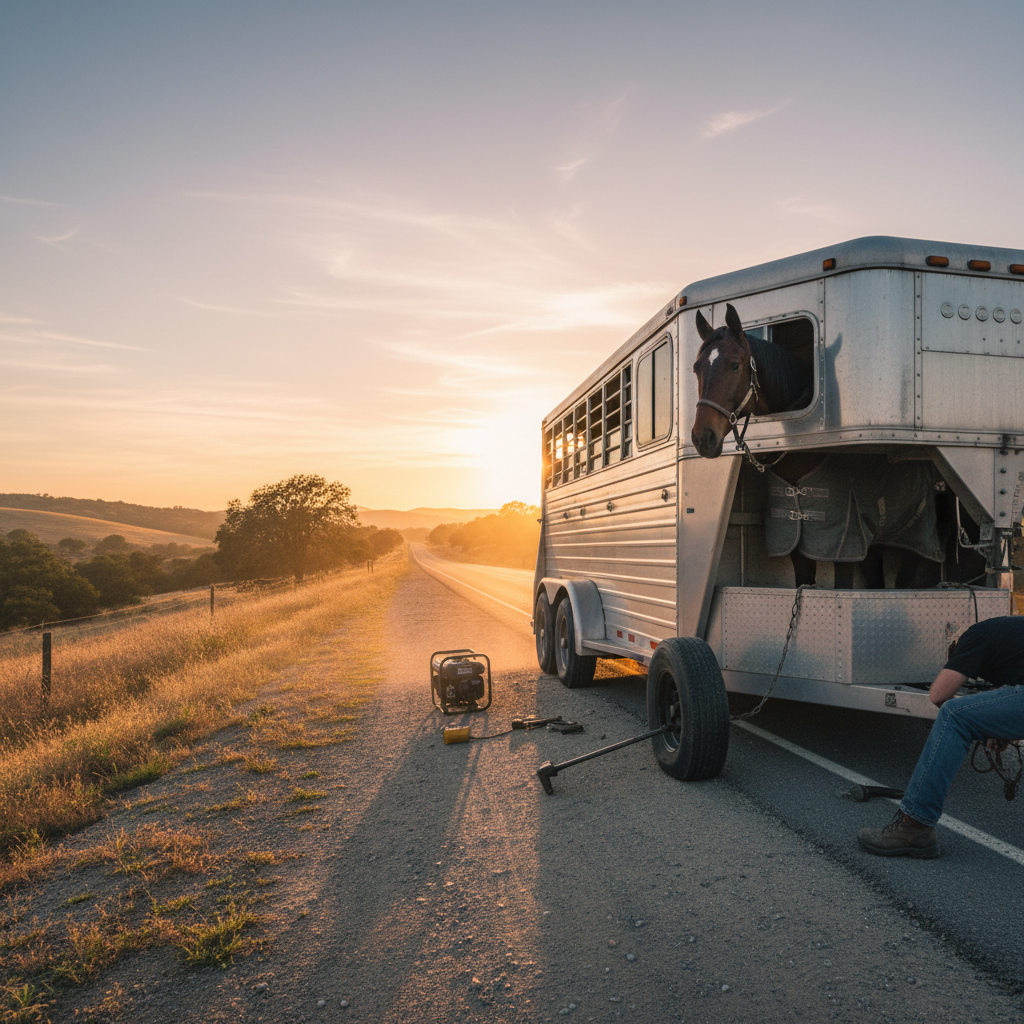

What to Do If Your Horse Trailer Breaks Down on a Long Haul
A horse trailer breakdown is a high-stakes emergency that occurs when a vehicle or trailer malfunction strands a towing rig and its live cargo on the roadside. Unlike standard vehicle failures, an equine-related breakdown requires simultaneous management of mechanical repairs, traffic safety, and the physiological welfare of large, flight-prone animals. Proper management of these situations involves immediate hazard mitigation, specialized communication with equine-friendly roadside assistance, and strict adherence to safety protocols to prevent injury to both humans and horses during the recovery process.
Immediate Safety Protocols: The First Sixty Seconds
The moment you realize your vehicle or trailer is failing, your primary objective is to reach the safest possible location. If you feel a tire blow or a engine shudder, do not brake aggressively. Gradually reduce speed and steer toward the widest available shoulder. If possible, aim for a flat, level surface away from bridges, tunnels, or high-speed curves where visibility is limited.
Once stopped, engage your hazard lights immediately. In the world of hauling live animals, visibility is your most potent defense against secondary accidents. If you have reflective triangles or flares, place them well behind your trailer - research shows that placing markers at intervals of 50, 100, and 150 feet provides oncoming drivers with the reaction time necessary to move over. Many people find that wearing a high-visibility safety vest, kept in the glovebox, is a life-saving habit during nighttime or low-visibility breakdowns.
Assess the ground stability. If you are on a soft shoulder, be cautious about using jacks. A fully loaded horse trailer exerts immense pressure, and a jack can easily sink into mud or soft gravel, potentially destabilizing the trailer and panicking the horses inside. Before exiting the vehicle, check your mirrors to ensure no traffic is approaching the driver-side door. If you must exit, do so on the side away from traffic whenever possible.
Assessing the Welfare of Your Horses
Once the perimeter is secure, your focus must shift to the animals inside. Horses are highly sensitive to changes in motion and the sounds of rushing traffic. A stationary trailer on a busy highway is a frightening environment for an animal bred for flight. Do not immediately open the ramp or the back doors. Doing so can tempt a panicked horse to jump out into the path of traffic, a leading cause of fatalities in roadside emergencies.
Instead, use side slats or drop-down windows (with bars in place) to check on their breathing and stress levels. Signs of extreme stress include excessive sweating, flared nostrils, and pawing at the floor. If a horse is acting out, the movements can rock the trailer, making it dangerous for you to perform mechanical inspections. Talk to them in a calm, low voice. According to many experienced haulers, maintaining a quiet demeanor can prevent the 'herd panic' effect if you are hauling multiple animals.
Consider the temperature inside the trailer. A stationary trailer loses the benefit of airflow generated by movement. In summer months, internal temperatures can spike within minutes. Ensure all vents are fully open. If the breakdown is expected to last more than an hour, you may need to offer water. However, never unload horses on a public highway unless the trailer is on fire or in immediate danger of being struck. The risk of a loose horse on a freeway almost always outweighs the discomfort of staying inside a stationary trailer.
Communicating with Emergency Services
Not all roadside assistance is created equal. When you call for help, you must explicitly state that you are hauling live animals. Standard towing companies may not have the heavy-duty equipment required to tow a loaded goose-neck or fifth-wheel trailer, and many lack the insurance or expertise to handle equine cargo.
Research shows that specialized equine roadside assistance memberships are a critical investment for long-haulers. When speaking to a dispatcher, provide your exact GPS coordinates. If you do not have a GPS device, look for mile markers or the nearest exit sign. Be prepared to answer the following questions:
- How many horses are on board?
- Is the trailer currently stable and level?
- Are you blocking a lane of traffic?
- Do you have a secondary vehicle available to transport the horses if the trailer is non-functional?
If the situation is dangerous - such as being stalled on a blind curve or a narrow bridge - call 911 or the local highway patrol. Explain that you are a 'live animal transport' in a hazardous position. Law enforcement can often provide a 'slow down' or 'move over' presence with their blue lights, which significantly increases the safety of the scene while you wait for a mechanic or tow truck.
Managing Mechanical Failures and On-Site Repairs
Common causes of trailer breakdowns include tire blowouts, bearing failures, and hitch malfunctions. If you are equipped and experienced, you may be able to change a tire yourself, but this should only be attempted if you are far enough from the white line to remain safe. Use a 'drive-on' jack (a ramp-style tool) if possible, as these are generally safer and faster than traditional hydraulic jacks when dealing with the shifting weight of a live load.
Bearing failure is a more significant issue. If you notice smoke coming from a wheel well or a screeching metallic sound, the bearings have likely seized. This often requires a specialized mechanic and potentially a flatbed trailer suitable for hauling your entire trailer. Do not attempt to 'limp' a trailer with a seized bearing to the next exit; the friction can generate enough heat to start a tire fire, which is a catastrophic scenario for the horses inside.
In the event of a truck engine failure, your priority is keeping the trailer's electrical systems functioning if possible. If it is dark, you need your marker lights to remain on. However, be mindful of your battery life. If the truck won't start, you may need to use portable LED puck lights or flares to mark the trailer's corners. Always carry a basic toolkit that includes a lug wrench (specifically fitted for your trailer's nuts), a spare tire with the correct PSI, and a heavy-duty flashlight.
The Extraction Plan: Unloading and Trans-loading
In some cases, the trailer cannot be repaired on-site, and the horses must be moved to another trailer. This is the most dangerous part of a breakdown. Trans-loading should only be done with the assistance of law enforcement or a professional recovery team who can block traffic.
Imagine a scenario where a second trailer pulls up alongside or behind your disabled one. To minimize the risk:
- Create a 'chute' using the doors of both trailers or portable panels if you carry them.
- Ensure the footing between the two trailers is as solid as possible; use mats or even hay to cover gaps or grates.
- Move horses one at a time, with the most experienced or calmest horse first.
- Keep lead ropes short and never wrap them around your hand.
If you are forced to wait several hours for a replacement trailer, monitor the horses for signs of colic or dehydration. Long periods of standing in a vibrating or high-stress environment can lead to 'shipping fever' (pleuropneumonia). Keeping a 'breakdown kit' that includes extra hay, several gallons of water from home, and a first-aid kit with electrolytes can make a significant difference in the animals' post-incident recovery.
Prevention and Preparation: The Best Defense
While not all breakdowns are avoidable, a recent survey of roadside incidents found that many could have been prevented with better pre-trip inspections. Before any long haul, perform a 'circle of safety' check. This includes checking tire pressure (including the spare), ensuring all lug nuts are torqued, and testing the breakaway brake battery.
Many people find that keeping a 'hauling log' helps track the age of tires. Trailer tires often look like they have plenty of tread, but they can dry-rot from the inside out if they sit for long periods. Most experts recommend replacing trailer tires every five to six years regardless of tread depth. Additionally, having your wheel bearings repacked annually is a standard preventative measure for anyone traveling across state lines.
Your breakdown plan should be written down and kept in the truck. This plan should include the phone numbers for your veterinarian, a national equine roadside assistance service, and a list of 'stabling-overnight' websites or apps. Being able to find a local boarding stable quickly can be the difference between a minor delay and a multi-day ordeal.
Key Takeaways for Roadside Emergencies
- Safety First: Move as far off the road as possible and use high-visibility markers immediately.
- Stay Hooked: Unless there is a fire, keep the horses inside the trailer and the trailer hitched to the truck for stability.
- Call for Specialists: Use an equine-specific roadside service to ensure the equipment is capable of handling the weight and needs of a horse trailer.
- Monitor Heat: Open all vents and monitor internal temperatures; dehydration and heat stress are major risks during stationary delays.
- Don't Unload: Never unload horses on a highway unless it is an absolute life-or-death situation; the risk of them running into traffic is too high.
- Document Everything: Keep a folder in your truck with your trailer's tire sizes, bearing specs, and emergency contacts.
Managing a breakdown while hauling horses is a test of character and preparation. By remaining calm, prioritizing visibility, and having a pre-arranged network of professional support, you can ensure that a mechanical failure remains a manageable inconvenience rather than a tragedy. Whether you are traveling for a competition or moving across the country, the safety of your horses depends entirely on the protocols you put in place before the wheels ever start turning. To learn more about traveling safely with underserved or exotic animals, explore our guides on Pets in the Hood.
Enjoying this post?
Get the next one sent straight to your inbox — no spam, unsubscribe anytime.