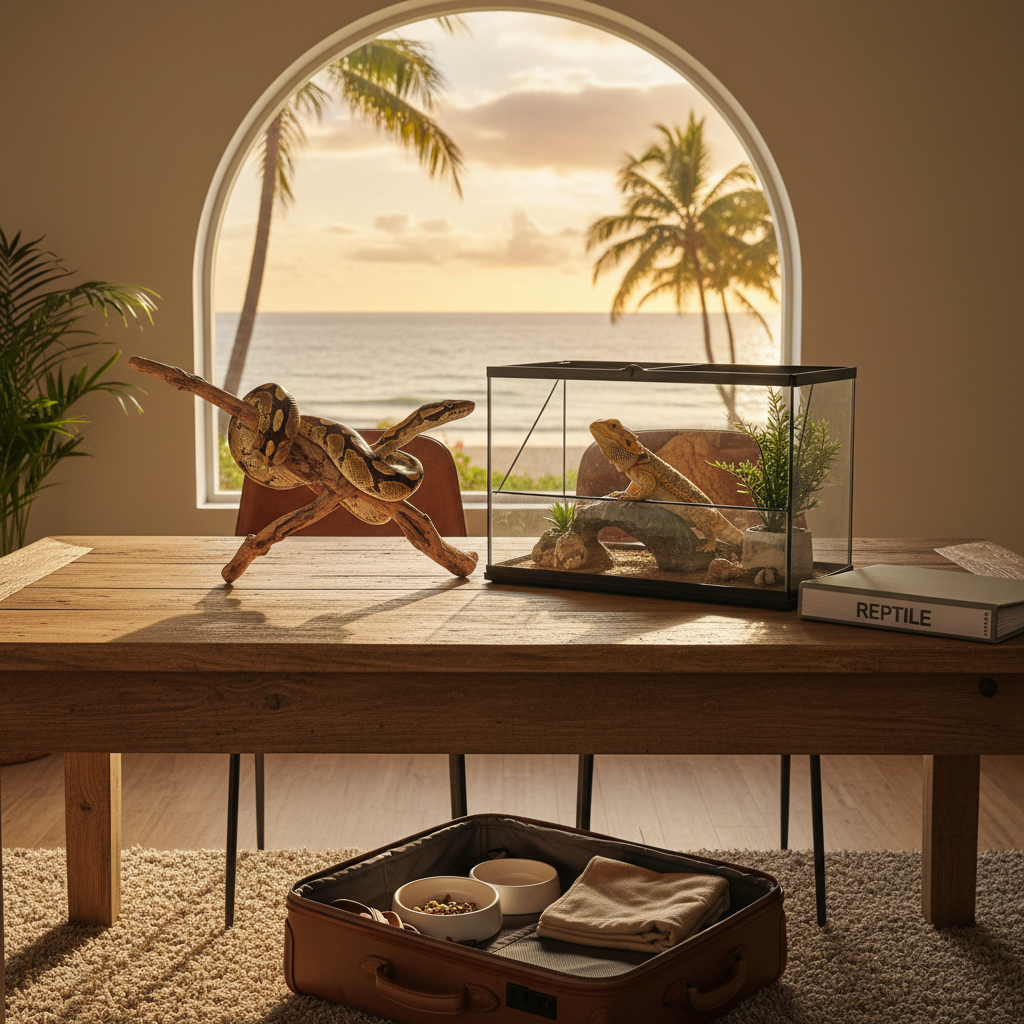

Vacation Rentals with Reptiles: What to Confirm Before You Book
Vacation rentals with reptiles refer to short-term lodging agreements where the host explicitly permits the stay of non-traditional pets such as lizards, snakes, or chelonians. Unlike dog-friendly accommodations, reptile-friendly rentals require specific disclosures regarding heating equipment safety, prey storage, and containment protocols to ensure a safe environment for both the animal and the property owner. Finding these listings involves verifying that 'pet-friendly' policies encompass exotic species, as many high-traffic platforms default to canine or feline definitions unless otherwise stated in the rental contract.
Understanding the 'Pet-Friendly' Nuance
When a vacation rental listing identifies as pet-friendly, it is a common mistake to assume that all species are welcome. In the travel industry, the term 'pet' is almost universally understood to mean domesticated dogs and cats. For a reptile owner, this ambiguity is a significant risk. Booking a space without clarifying that your companion is a bearded dragon or a ball python can lead to immediate eviction upon arrival without a refund.
Research shows that many property owners have specific concerns regarding reptiles that they do not have for mammals. These concerns often stem from a lack of familiarity with exotic husbandry. For instance, a host may worry about the potential for salmonella or the risk of an escaped animal. By proactively addressing these concerns during the inquiry phase, you establish yourself as a responsible keeper. Always check the fine print of the platform's terms of service, but remember that the individual host's house rules usually take precedence in private rentals.
The Importance of Written Consent
Never rely on a verbal agreement or a vague 'yes' via a phone call. Every confirmation regarding your reptile should be documented within the booking platform's internal messaging system. This creates a digital paper trail that protects you if a property manager or neighbor raises an objection during your stay. When asking for permission, be specific about the species. Instead of asking 'Can I bring my pet reptile?', ask 'I have a 4-foot enclosure for a well-behaved, non-venomous ball python; would your property be able to accommodate this?'. This level of detail builds trust and eliminates the 'fear of the unknown' that many hosts experience.
Crucial Questions for the Property Host
Before you click the book button, there are several technical aspects of your reptile's care that must be compatible with the rental unit. Reptiles have specific environmental needs that the average vacation home may not be equipped to handle without prior adjustment.
Electrical Safety and Power Loads
Reptile husbandry relies heavily on heat lamps, ceramic heat emitters, and UV lighting. Many people find that older vacation rentals, particularly historic cottages or remote cabins, have outdated electrical systems. You must confirm that the outlets in the designated room can handle the constant draw of your heating elements. Ask the host if there are any restrictions on using high-wattage appliances. It is also wise to inquire about the stability of the local power grid; if the area is prone to blackouts, you will need to bring battery backups or heat packs to ensure your reptile's temperature remains stable.
Temperature Controls and HVAC Systems
While you will likely bring your own heating equipment, the ambient temperature of the room is just as important. Some rentals use smart thermostats that the host controls remotely to save energy. If the host lowers the temperature to 60 degrees Fahrenheit while you are out for the day, it could prove fatal for a tropical species. Confirm that you will have full control over the thermostat in your specific unit or room.
Managed Expectations: Prey and Feeding Protocols
One of the most sensitive topics in reptile travel is the storage and handling of prey. Whether you feed live insects, frozen rodents, or specialized gel diets, you must disclose how these will be managed.
Freezer Space and Cross-Contamination
If you use frozen-thawed feeders, you will likely need access to a freezer. Many hosts are understandably uncomfortable with the idea of whole rodents being stored next to their guest ice trays. To avoid conflict, consider bringing a dedicated small cooler with dry ice or a portable 12v freezer. If you must use the communal freezer, provide a solid, opaque, airtight container that is clearly labeled. Confirming this protocol with the host beforehand prevents a 'horror movie' moment when they come in to check the fridge after you leave.
Managing Live Insects
Escaped feeder insects are a primary reason why hosts reject reptile owners. If you are traveling with a lizard that requires crickets or roaches, explain your containment strategy. Mention that you use escape-proof bins and that no live prey is left loose in the rental. According to recent surveys of short-term rental hosts, the fear of a localized pest infestation is a top-tier concern. Demonstrating that you have a plan for 'feeder management' can often turn a 'no' into a 'yes'.
Safety and Security: Preventing Escapes
In a new environment, a reptile may be more inclined to explore or hide. A vacation rental is full of unfamiliar nooks, vents, and floor gaps that are not present in your home setup.
Evaluating the Floor Plan
Ask the host about the layout of the room where the enclosure will be kept. Are there floor-level vents? Are there gaps under the doors that lead to the outdoors or into the wall cavities? Consider bringing 'door snakes' or towels to block these gaps while your reptile is out of its enclosure for tank cleaning or supervised handling.
The 'No-Entry' Policy
Most vacation rentals include a clause that allows owners or maintenance staff to enter the property for emergencies or routine checks. When traveling with a reptile, you must request a '24-hour notice' policy for any entries. This prevents a scenario where a startled housekeeper accidentally leaves a door open or tips over a heat lamp. Some owners find that placing a small, polite sign on the door stating 'Live Harmless Reptile Inside - Please Keep Door Closed' provides an extra layer of security.
Cleaning and Liability Concerns
Standard cleaning fees usually cover the basics like vacuuming and linens. However, the presence of a reptile enclosure can lead to additional scrutiny.
Managing Substrate and Odor
Reptiles are generally odor-free compared to dogs, but substrate like cypress mulch or wood shavings can be messy. Ensure you have a small handheld vacuum to clean up any substrate that spills during your stay. Some hosts may ask for an additional 'exotic pet deposit.' While this might seem unfair, it is often a negotiable alternative to an outright rejection. Offer to pay a refundable deposit to show you are confident in your pet's cleanliness.
Insurance and Liability
Check if your personal pet insurance or umbrella policy covers damages caused by your animals while traveling. While it is rare for a reptile to cause physical damage to a structure (unlike a cat scratching furniture), the peace of mind offered by insurance can be a selling point when negotiating with a hesitant host. Mentioning that you are insured shows a level of professionalism that most casual travelers lack.
Top Takeaways for Booking Success
- Disclose, don't hide: Secretly bringing a reptile is grounds for immediate eviction and a permanent ban from most booking platforms.
- Define the setup: Describe the size of the enclosure and the type of heating equipment to demystify the pet for the host.
- Verify power stability: Ensure the rental's electrical system can handle 24/7 heating elements without tripping breakers.
- Plan for prey storage: Use opaque, sealed containers for frozen feeders or escape-proof bins for insects to respect the host's kitchen space.
- Get it in writing: Keep all permissions within the platform's messaging app to provide a clear record of the agreement.
- Secure the perimeter: Inspect the room for vents or gaps where a small reptile could hide if it were to get loose during maintenance.
Final Thoughts on Reptile-Friendly Travel
Traveling with a reptile is a rewarding way to ensure your pet receives the highest level of care while you are away from home. However, the success of the trip depends entirely on the transparency of the booking process. By viewing the rental through the eyes of the host-who may be worried about heat lamps, escaped bugs, or salmonella-you can provide the necessary context to put their mind at ease.
Imagine the relief of arriving at a beautiful beach house or mountain cabin knowing that your bearded dragon's setup is authorized, safe, and welcome. As the community of exotic pet travelers grows, setting a standard of excellence in how we interact with vacation rental hosts ensures that these doors remain open for years to come. Always leave the space cleaner than you found it, and provide a detailed review of how the host accommodated your reptile to help other keepers in the community find safe places to stay.
Are you planning your next trip with your scaled companion? Join our community at Pets in the Hood to share your favorite reptile-friendly rentals and get more specialized travel tips for every species underrepresented pet in the hood. Safe travels and happy herping!
Enjoying this post?
Get the next one sent straight to your inbox — no spam, unsubscribe anytime.