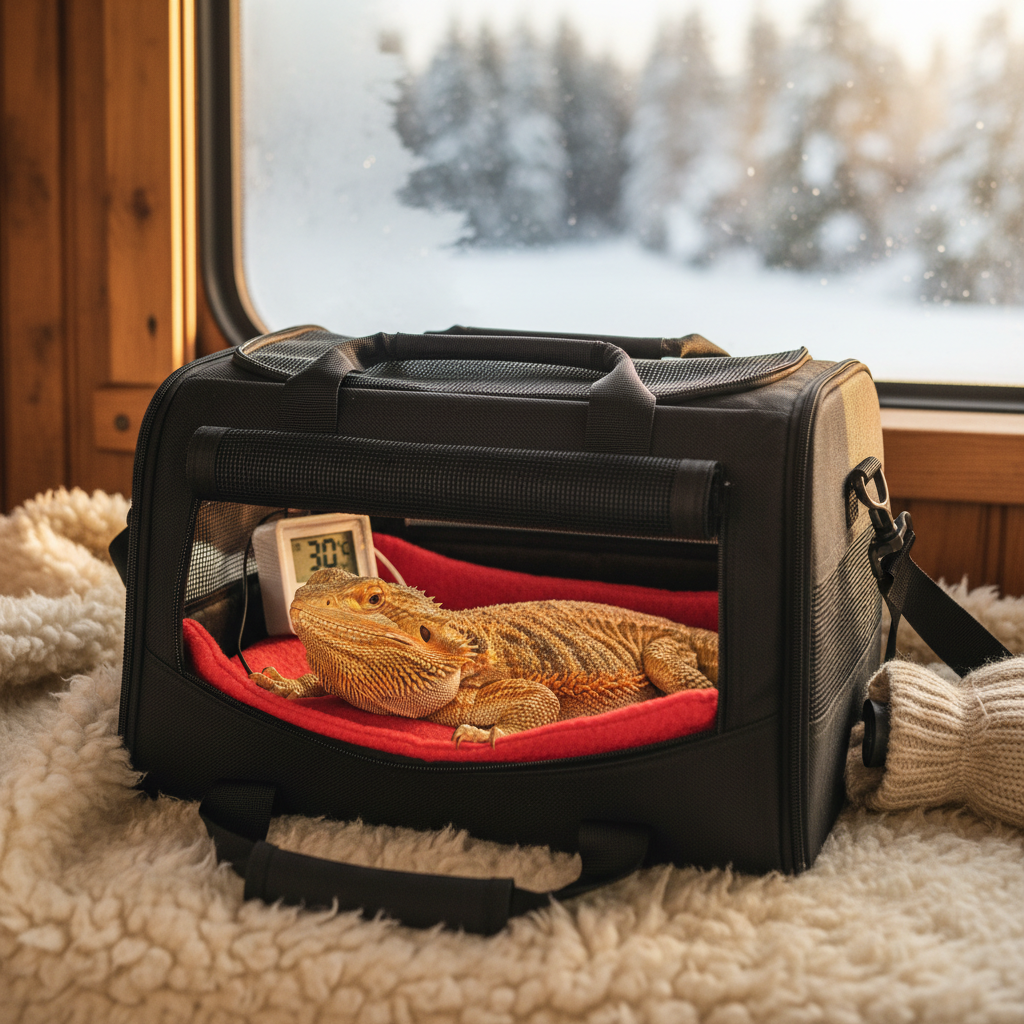

Traveling with a Reptile in Cold Weather: Keeping Temperatures Stable
Traveling with a reptile in cold weather is the process of transporting ectothermic animals during low ambient temperatures while utilizing external heat sources and insulation to maintain a species-specific thermal gradient. Because reptiles cannot generate their own body heat, they rely entirely on their environment to regulate metabolic functions; therefore, cold-weather transport requires meticulous planning to prevent respiratory infections, digestive failure, or life-threatening hypothermia. For exotic pet owners, this involves creating a 'microclimate' within a portable carrier that mimics the stable conditions of a permanent enclosure.
Understanding the Risks of Cold Weather Transport
When the outdoor temperature drops, the safety window for a reptile becomes significantly smaller. Most common pet reptiles, such as Bearded Dragons, Ball Pythons, and Leopard Geckos, thrive in environments ranging from 75 to 90 degrees Fahrenheit. Exposure to temperatures below 60 degrees Fahrenheit for even a short duration can lead to cold-stunning, a state where the animal's heart rate and breathing slow to dangerous levels.
Research shows that sudden thermal shocks are often more damaging than gradual cooling. If a reptile is moved from a 90-degree basking spot directly into a 40-degree car, the rapid contraction of blood vessels can cause significant physiological stress. Long-term exposure to suboptimal temperatures during travel often results in a weakened immune system, making the animal susceptible to 'mouth rot' (infectious stomatitis) or pneumonia shortly after the trip concludes. Understanding that your reptile lacks the internal mechanisms to fight off the cold is the first step in successful winter travel.
Essential Gear for the Winter Reptile Traveler
To bridge the gap between your home and your destination, you must invest in high-quality insulation and heating equipment. Standard plastic pet carriers offer almost zero thermal protection, meaning the interior temperature will equalize with the outside air in a matter of minutes.
Insulated Shipping Boxes and Styrofoam Liners
Many breeders and professional transporters use thick-walled Styrofoam boxes (often referred to as 'shippers') for winter movement. These boxes are designed to trap air and prevent heat transfer. If you do not have a dedicated shipping box, you can line a sturdy plastic tub or cardboard box with one-inch thick polystyrene foam sheets. The goal is to create a sealed environment where the only exchange of air happens through small, controlled ventilation holes.
Uniheat Packs and Chemical Warmers
Unlike standard hand warmers found in sporting goods stores, specialized 'Phase Change' heat packs or 'Uniheat' shipping warms are designed to provide a steady, low-level heat for 24, 48, or even 72 hours. Standard hand warmers often peak at temperatures that are too high (potentially burning the animal) and then lose their heat too quickly. It is critical to select a heat pack rated for the duration of your trip.
Digital Thermometers and Hygrometers
Never guess the temperature inside the travel container. Digital thermometers with remote probes allow you to monitor the internal temperature without opening the box and letting the warmth escape. Some modern pet owners use Bluetooth-enabled sensors that send real-time alerts to their smartphones if the temperature drops below a pre-set threshold. Maintaining a balance between heat and humidity is also vital, as dry winter air can cause shedding issues or dehydration.
Step-by-Step Guide to Packing Your Reptile
Preparing the travel container should happen at least two hours before you depart to ensure the internal environment has stabilized.
- Prepare the Inner Container: Place the reptile in a soft, breathable fabric bag (like a pillowcase for snakes) or a small plastic deli cup with air holes for lizards and frogs. This 'container-within-a-container' method provides an extra layer of insulation and prevents the animal from moving too much.
- Activate the Heat Source: Shake the heat pack to activate it and wait about 20 minutes to ensure it is warming up. Never place a heat pack in direct contact with the reptile or the fabric bag. Wrap the heat pack in several layers of paper towel or a thin cloth and tape it to the underside of the box lid or a side wall.
- Buffer the Space: Fill any empty space in the insulated box with crumpled newspaper, bubble wrap, or foam peanuts. This prevents the inner container from sliding and, more importantly, reduces 'dead air' space that is harder to keep warm.
- Check the Gradient: Ensure there is a 'cool side' within the travel box. If the entire box becomes 100 degrees, the reptile has no way to cool down and may suffer from heatstroke. Use your thermometer to verify that the area furthest from the heat pack remains within a safe, moderate range.
The Realities of Car and Transit Travel
When traveling by vehicle, many people find that the car's heater is insufficient on its own. While the cabin may feel comfortable to a human in a heavy coat, the floorboards of a car are often significantly colder than the seat level.
Vehicle Placement
Always place the reptile carrier on a seat rather than the floor. If possible, secure the box with a seatbelt. Avoid placing the box directly in front of a high-blast heater vent, as this can cause the plastic or foam to overheat rapidly. Consider covering the entire carrier with a heavy fleece blanket to provide an additional thermal barrier against drafts when the car doors are opened.
Pre-Heating the Vehicle
Never place a reptile into a cold car. Start the engine and run the heater for at least 15 to 20 minutes until the interior reaches a stable room temperature. If you are stopping for gas or a bathroom break, try to keep these stops as brief as possible. If the engine must be turned off, the insulated box will buy you time, but you should monitor the thermometer closely.
Emergency Contingencies
Consider what would happen if your vehicle broke down in sub-zero temperatures. A 'winter emergency kit' for your reptile should include extra 72-hour heat packs, a Mylar emergency blanket to wrap around the carrier, and even a battery-powered heating pad if you have a portable power station. Research shows that being over-prepared is the only way to mitigate the high stakes of cold-weather transport.
Species-Specific Considerations
Not all reptiles react to the cold in the same way. Their size, natural habitat, and metabolic rate influence how you should handle their travel.
Tropical Species (High Humidity and Heat)
Species like Blue Tongue Skinks, Chameleons, and Green Iguanas are particularly sensitive to the dry, biting cold of winter. For these animals, it is often helpful to include a slightly damp (not soaking wet) sponge or paper towel inside the inner container to maintain humidity levels, as long as the heat source is sufficient to keep that moisture from becoming a 'cold compress.'
Desert Species (High Heat, Low Humidity)
Bearded Dragons and Uromastyx require high basking temperatures but are often more tolerant of dry air. However, they are prone to respiratory distress if the air they breathe is too cold. Ensure their travel box stays above 70 degrees at all times, even if they aren't at their preferred 100-degree basking temperature.
Small and Juvenile Reptiles
Smaller animals lose body heat much faster than large ones due to their higher surface-area-to-volume ratio. Baby geckos or hatchling snakes require much more aggressive insulation and more frequent monitoring than an adult Boa Constrictor or a large Tortoise.
Post-Travel Recovery and Observation
Once you arrive at your destination, the temptation is to immediately put the reptile back under a high-intensity basking lamp. However, a gradual return to normal temperatures is often safer.
- Acclimation: Allow the travel box to sit in the new room for 30 minutes before opening it. This allows the air inside to slowly adjust.
- Hydration: Traveling is dehydrating. Offer water immediately. For many lizards, a lukewarm (not hot) soak can help rehydrate them and stimulate their metabolism.
- Monitoring for Illness: Keep a close eye on your pet for the next 7 to 14 days. Look for signs of 'wheezing,' bubbles at the nose, or lethargy. According to many herpetologists, these are red flags for a respiratory infection triggered by travel stress.
- Delayed Feeding: Do not feed your reptile until they have had at least 24 hours to reach their stable basking temperature. Reptiles require heat to digest food; feeding a 'cold' reptile can lead to the food rotting in the stomach, which is a medical emergency.
Portable Power and Modern Tech Solutions
For long-distance movers or those frequently on the road, technology has provided new ways to keep ectotherms safe.
Portable Power Stations
Devices like Jackery or Goal Zero units can power small heat mats or low-wattage ceramic heat emitters inside a larger ventilated tub. This is a game-changer for multi-day trips where chemical heat packs might be inconsistent.
USB-Powered Heat Mats
While not powerful enough for a permanent enclosure, USB-powered heat mats can be plugged into a car's dash or a portable power bank to provide a steady 'warm spot' on the bottom of a carrier. Always ensure there is a thick layer of substrate or cardboard between the mat and the animal to prevent thermal burns.
Essential Winter Travel Takeaways
- Insulation is King: A Styrofoam-lined box is the most effective tool for stopping heat loss.
- Use The Right Heat: Only use Uniheat or specialized reptile shipping packs; avoid standard hardware store hand warmers.
- No Direct Contact: Never let your reptile touch the heat source directly; use buffers like towels or newspaper.
- Monitor Constantly: Use a digital probe thermometer to check temperatures without opening the box.
- Pre-Heat Everything: Warm up the car and the travel box before putting the reptile inside.
- Observe Post-Trip: Watch for signs of respiratory infection for two weeks following cold-weather travel.
Ready to Hit the Road?
Traveling with a reptile in the winter doesn't have to be a high-stress event if you respect the biology of your pet. By simulating a warm environment and preparing for the 'worst-case' weather scenario, you can ensure your scaly companion arrives at their destination healthy and active. Whether you are moving across the country or just heading to a vet appointment, your reptile depends on your preparation to stay safe. Document your setup, test your heat packs in advance, and always have a backup plan. For more tips on traveling with unique and exotic pets, explore our other guides at Pets in the Hood.
Enjoying this post?
Get the next one sent straight to your inbox — no spam, unsubscribe anytime.