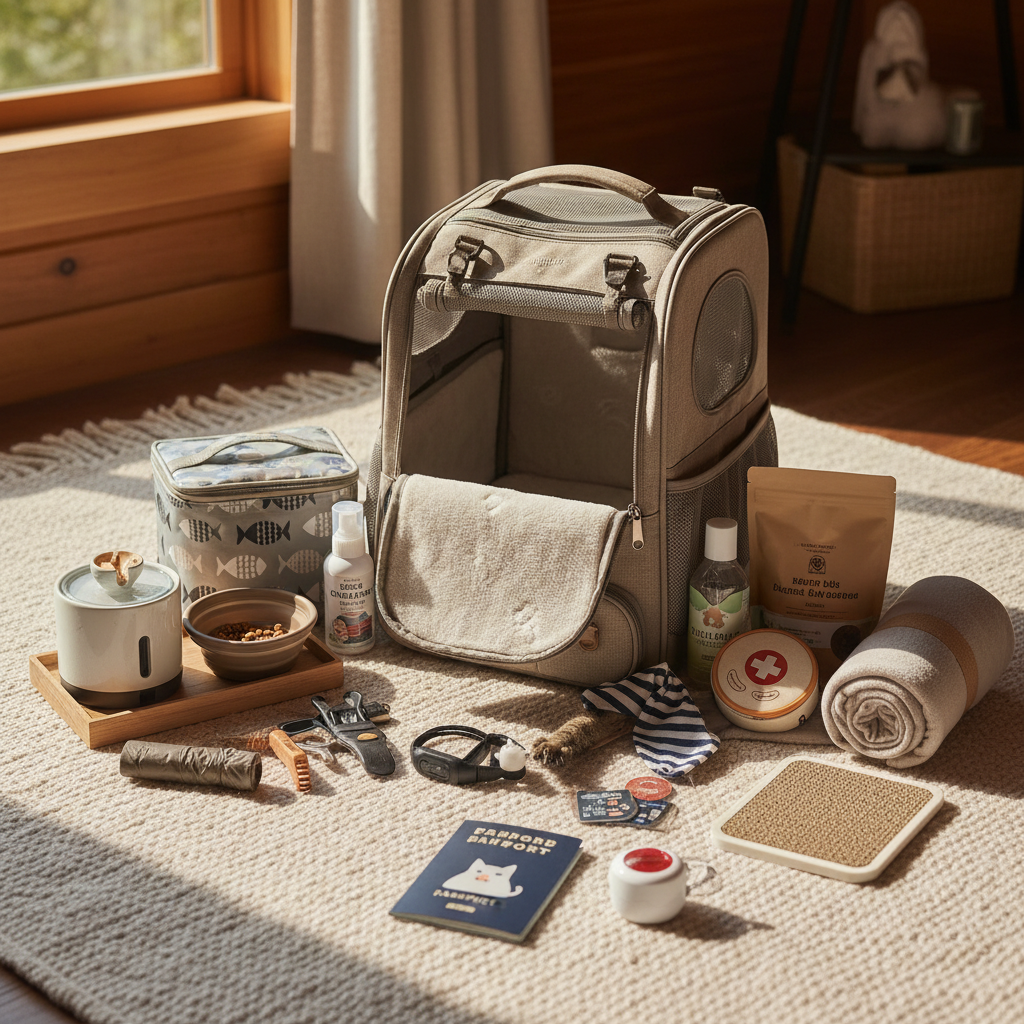

Travel Gear Checklist for a Cat: 12 Items That Earn Their Space
A travel gear checklist for a cat is a specialized inventory of equipment designed to maintain feline safety, hydration, and psychological security during transit. Unlike canine gear, cat-specific travel items prioritize containment and environmental control to mitigate the stress responses often triggered by unfamiliar territory. Choosing the right gear involves balancing portability with the physical requirements of a species that inherently values stability and hidden spaces.
Traveling with a cat is no longer a niche activity reserved for cross-country moves. As the "adventure cat" movement grows, more owners are taking their feline companions on road trips, hiking trails, and even international flights. However, success depends entirely on your kit. If you are missing a single critical item, a minor inconvenience can turn into a stressful event for both the pet and the owner. This guide breaks down the 12 items that truly earn their space in your luggage, ensuring your cat remains safe, healthy, and calm regardless of the destination.
1. The Crash-Tested Carrier
The foundation of any travel gear checklist for a cat is the carrier. However, not all carriers are created equal. For road travel, a crash-tested carrier is the most important investment you can make. Many standard plastic crates or soft-sided bags can collapse or shatter under the force of a high-speed impact. Research shows that carriers with Center for Pet Safety (CPS) certification offer the highest level of protection by utilizing reinforced frames and secure seatbelt attachment points.
When selecting a carrier, consider the size of your cat. While it may be tempting to buy a large crate, a carrier that is too spacious can actually be dangerous during travel, as the cat may be tossed around inside during sudden stops. The ideal carrier should allow your cat to stand up, turn around, and lie down comfortably, but not much more. For air travel, ensure the carrier meets specific airline dimensions for under-seat stowage, which usually requires a soft-sided, flexible design.
2. Portable Litter Box Solutions
One of the biggest hurdles in feline travel is managing bathroom breaks. A portable litter box is an essential item that earns its space by preventing accidents and maintaining a sense of routine. These are typically made of durable, waterproof canvas that can be folded flat when not in use. Many travelers prefer a zippered version that can hold litter inside during transit, though it is usually best to empty it to avoid odors in a confined car.
Consider the type of litter you use as well. Many people find that switching to a lightweight or pellet-based litter specifically for travel reduces the weight of their gear. If your cat is particularly picky, try a "scent-bridge" technique: mix a small amount of your home litter with the travel litter to provide a familiar olfactory cue. This helps the cat recognize the portable box as their designated spot immediately upon arriving at a hotel or campsite.
3. High-Security Harness and Leash
Even the most relaxed cat can spook in an unfamiliar environment. A high-security harness (often called an "escape-proof" harness) is vital for safety during rest stops or transitions. Unlike collars, which a cat can easily back out of using their flexible shoulders, a vest-style harness distributes pressure across the chest and back, making it much harder to escape.
When shopping for a harness, look for adjustable straps and breathable mesh fabric. It is important to perform a "two-finger" fit test: you should be able to fit two fingers under the harness, but no more. Pair this with a lightweight leash. For cats, a standard 4-to-6-foot leash is often better than a retractable one, as it gives the owner more immediate control in crowded or high-traffic areas. Remember to let your cat wear the harness at home for several weeks before the trip to build a positive association.
4. Spill-Proof Water and Food Bowls
Hydration is a common concern during travel, especially since many cats are reluctant to drink when stressed. Spill-proof bowls are designed with a tapered lip or a floating splash guard to prevent water from sloshing out while the vehicle is in motion. These items earn their space by keeping your car upholstery dry and ensuring your cat has constant access to water.
For food, collapsible silicone bowls are excellent space-savers. They can be clipped to the outside of a backpack or tucked into a small pocket. If your cat is a fast eater or gets an upset stomach from travel anxiety, consider a slow-feeder mat or a small lick mat. Licking is a self-soothing behavior for cats, and providing a small amount of wet food or a creamy treat on a mat can help them decompress during long stretches of driving.
5. Feline Pheromone Sprays and Wipes
Because cats depend heavily on their sense of smell to navigate the world, a travel gear checklist for a cat must include pheromone technology. Synthetic pheromones mimic the natural facial pheromones cats leave behind when they rub their cheeks against objects to mark them as safe. Applying these sprays to the interior of the carrier, blankets, or car seats approximately 15 minutes before travel can significantly lower cortisol levels.
Many owners find that pheromone wipes are more convenient than sprays during active travel, as they can be used to quickly refresh the scent of the carrier during a pit stop without the loud hissing sound of an aerosol can. While not a sedative, these products provide a subtle "all-clear" signal that helps cats feel more at home in a moving vehicle or a new hotel room.
6. Temperature-Controlled Bedding
Cats have a higher core body temperature than humans, and they can be sensitive to the fluctuations of a car's air conditioning or the cold floor of an airplane. Temperature-controlled bedding-such as self-warming pads that reflect the cat's own body heat-is a lightweight and electricity-free way to keep them comfortable. These pads usually feature a layer of Mylar or similar thermal material tucked between layers of fleece.
In reverse scenarios, such as traveling through desert climates, a cooling mat made of pressure-activated gel can prevent overheating. These items are compact and can be placed directly inside the carrier. Imagine a long summer drive where your car's AC struggle to reach the cargo area; a cooling mat provides a dedicated micro-climate for your pet, ensuring they don't suffer from heat exhaustion.
7. A Comprehensive Pet First Aid Kit
Safety gear is non-negotiable. A pet-specific first aid kit should be tailored to feline needs. While you can buy pre-made kits, many experienced travelers choose to build their own to save space. Necessary items include blunt-tipped scissors, antiseptic wipes, gauze, medical tape, and a digital thermometer.
Additionally, include a styptic powder or pen to stop bleeding if a claw is snagged, and a pair of fine-tipped tweezers for removing ticks or splinters. Research shows that having a hard copy of your cat's medical records and vaccination certificates inside this kit is also crucial, especially if you need to visit an emergency vet in another state or country. Always include a small supply of any regular medications your cat takes, plus a few extra days' worth in case of travel delays.
8. Expandable Travel Tents or Playpens
When you arrive at your destination, whether it is a family member's house or a vacation rental, your cat needs a safe zone. An expandable travel tent or mesh playpen provides a "home base" where the cat can feel secure while observing their new surroundings. These products are usually made of lightweight mesh and pop up in seconds.
These tents earn their space by preventing the cat from bolting under a bed or into a dusty crawlspace the moment they are let out of the carrier. They can also serve as a safe outdoor enclosure if you are camping or staying in a place with a secure patio. Ensure the tent is large enough to hold the cat's bed, a small litter box, and food bowls. This creates a sense of continuity that significantly reduces the time it takes for a cat to acclimate to a new environment.
9. Calming Treats and Supplements
While some cats require prescription sedation from a veterinarian, many benefit from over-the-counter calming supplements. These often contain ingredients like L-theanine, tryptophan, or chamomile, which are known to promote relaxation. These supplements are available in soft chew forms that most cats view as a high-value treat.
It is important to test any supplement at home before your trip to ensure your cat does not have an adverse reaction or an upset stomach. When used as part of a travel gear checklist for a cat, these treats can be given about 30 to 60 minutes before departure. They provide a gentle buffer against the noise of the road and the vibration of the engine, making the journey much more tolerable for sensitive animals.
10. Portable Grooming Tools and Cleaning Supplies
Travel can be messy. Whether it's a litter box mishap, a bout of motion sickness, or simply the extra shedding caused by stress, you need a way to clean up. Portable grooming wipes are essential for cleaning paws or fur without the need for a full bath. These should be unscented to avoid irritating the cat's sensitive nose.
Additionally, pack a small bottle of enzymatic cleaner and a few paper towels. Enzymatic cleaners are the only products that truly break down the proteins in pet waste, ensuring that no lingering odors remain. This is not only a matter of cleanliness but also a courtesy to your hosts or the hotel management. A compact lint roller also earns its space, helping you keep cat hair off rental car seats and upholstered furniture.
11. Identification and Tracking Technology
While your cat should always have a microchip, a physical ID tag and a GPS tracker are vital for travel. In a new location, a cat that escapes will not know the landmarks to find their way back. A GPS tracker that attaches to the harness can provide real-time location data to your smartphone.
If you prefer not to use a GPS device, at the very least, ensure your cat's ID tag is updated with your current mobile phone number, not a landline at home. Many travelers use "temporary tags" or luggage tags attached to the carrier that list the address of the destination or the hotel where they are staying. This ensures that if the carrier is misplaced during transit, the finder knows exactly where the cat belongs.
12. High-Value Toys and Enrichment
Finally, do not underestimate the power of mental stimulation. A bored cat is an anxious cat. Bring along a few of your cat's favorite toys, particularly those that have a familiar scent. Self-play toys, like a kicker toy or a small catnip-infused mouse, can help a cat blow off steam once you reach your evening stop.
Consider also bringing a small "scent blanket"-a piece of fleece or an old T-shirt that smells like home. Placing this inside the carrier or the travel tent provides a powerful psychological anchor. For many cats, the familiar smell of their owner is the most effective calming tool available. This item takes up almost no space but provides immense value in keeping your cat grounded during the chaos of travel.
Key Takeaways for Feline Travelers
- Prioritize Safety: Always use a crash-tested carrier or a secure harness to prevent escape or injury.
- Maintain Routine: Bring familiar litter, food, and scents to help your cat feel at home in new environments.
- Be Prepared for Emergencies: A pet-specific first aid kit and current medical records are essential for any trip.
- Focus on Environmental Control: Use cooling mats or self-warming beds to compensate for temperature changes.
- Patience is Key: Allow your cat time to explore new gear at home before taking it on a long journey.
Success in traveling with a cat comes down to preparation. By curating a travel gear checklist for a cat that focuses on these 12 essential items, you are investing in your pet's well-being and your own peace of mind. Whether you are heading into the wilderness or navigating a busy airport, having the right equipment ensures that the adventure remains a positive experience for every member of the family.
Ready to hit the road? Make sure you check out our other guides on feline-friendly destinations and the best adventure-ready RVs for pet owners. Safe travels!
Enjoying this post?
Get the next one sent straight to your inbox — no spam, unsubscribe anytime.