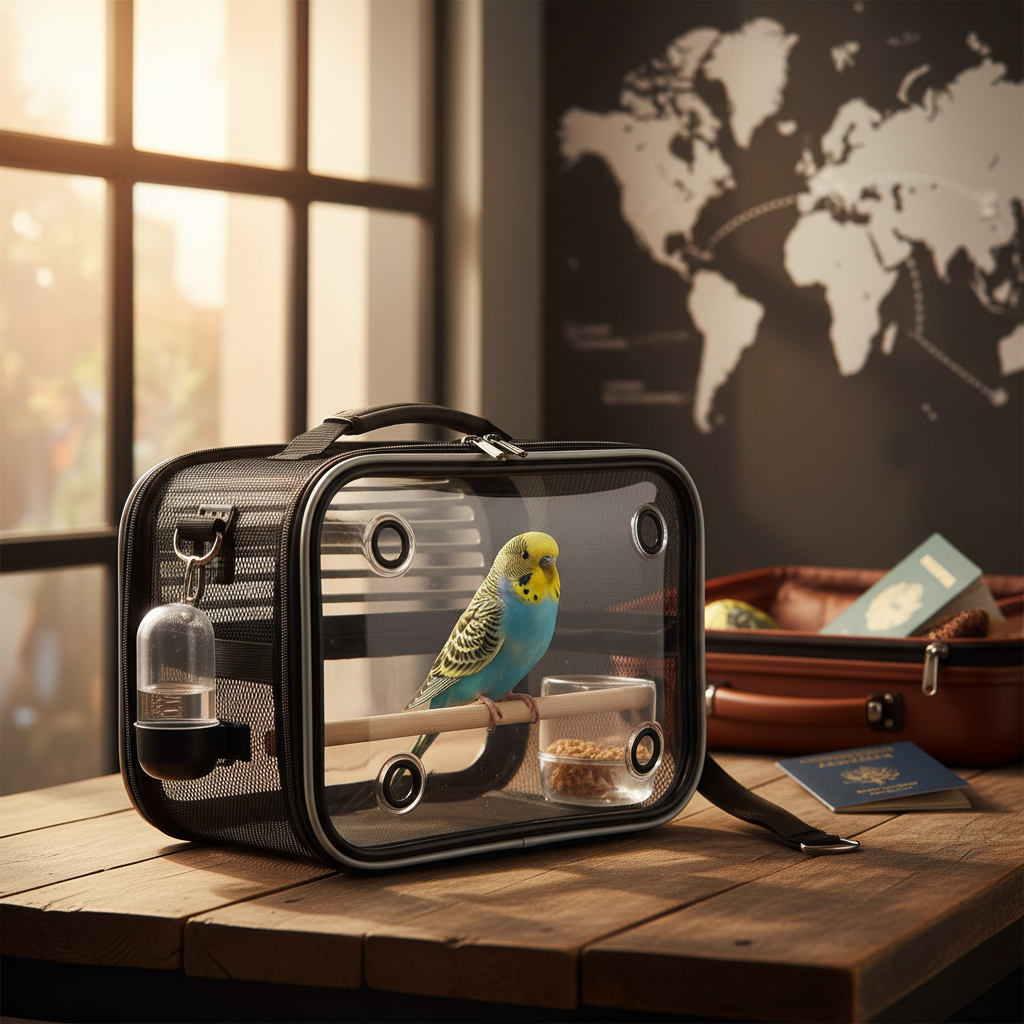

The Best Carrier Setup for Traveling with a Bird
A bird travel carrier is a specialized, secure enclosure designed to transport avian species while maintaining their physical safety, psychological comfort, and environmental stability. Unlike standard cages, these setups prioritize portability and impact resistance, ensuring the bird remains contained and protected from external stressors such as drafts, noise, and predators. For avian owners, a successful carrier setup is characterized by appropriate perch placement, secure feeding stations, and a layout that minimizes the risk of injury during sudden movement or turbulence.
Choosing the Foundation: Hard-Sided vs. Soft-Sided Carriers
Selecting the right housing is the most critical decision in your travel setup. The material of the carrier dictates how well your bird is protected from physical impacts and temperature fluctuations. For many bird owners, a hard-sided plastic or acrylic carrier is the gold standard for long-distance travel. These structures are rigid, meaning they will not collapse if a piece of luggage shifts against them in a vehicle. Furthermore, acrylic carriers offer high visibility, which can be comforting for birds that like to see their surroundings, though they require careful ventilation management to prevent heat buildup.
Soft-sided carriers are often preferred for short trips or for owners who need to comply with specific airline under-seat dimensions. These are typically made of reinforced mesh and nylon. While they are lighter and easier to carry, they are susceptible to chewing. A determined parrot can shred a mesh window in a matter of minutes if left unmonitored. When selecting a soft-sided option, ensure it has a sturdy internal frame that prevents the fabric from sagging onto the bird.
Regardless of the material, the size of the carrier must be proportional to your bird. A carrier that is too large can be dangerous; if the vehicle stops suddenly, a bird in an oversized space can be thrown against the walls with significant force. Ideally, the bird should be able to stand comfortably, turn around without hitting its tail against the bars, and have enough head clearance to stretch, but it should not have enough room to attempt flight.
Perch Placement and Grip Mechanics
Inside the carrier, the perch is the most important piece of furniture. Because birds spend the entirety of the trip on their feet, the perch must provide a secure, non-slip surface. Many people find that natural wood perches are superior to smooth plastic or dowel rods. The irregular texture of dragonwood, manzanita, or grapevine allows the bird to shift its weight and maintain a firm grip even when the carrier is tilting.
Height placement is a nuanced task. You should mount the perch as low as possible while still allowing the bird's tail to clear the floor. A low center of gravity is essential for stability. If the perch is set too high, the bird is more likely to lose its balance during a sharp turn or if the carrier is bumped. If your carrier allows for it, installing two perches at the same low level can provide options for the bird to move back and forth, which helps alleviate the monotony of a long journey.
For birds with mobility issues or those that are particularly high-strung, some owners choose to use a padded floor or a thick layer of soft bedding instead of a perch. This is often seen in 'hospital' setups or for species that naturally spend more time on the ground. However, for the majority of parrots, a solid, well-bolted perch is the safest way to prevent 'keeling over' during transit.
Hydration and Nutrition: Managing the Mess
Maintaining a bird's metabolic rate during travel is a challenge, primarily due to the risk of water spillage. Traditional water bowls often empty within the first twenty minutes of a car ride, leaving the bird thirsty and the bedding soaked. Research shows that many avian veterinarians recommend using a drip-style water bottle, provided the bird has been trained to use one before the trip begins.
If your bird does not use a water bottle, consider offering 'wet' foods as a source of hydration. Slices of cucumber, apple, orange, or grapes can provide much-needed moisture without the risk of a flooded carrier. For the primary diet, stick to dry pellets or familiar seed mixes. Travel is not the time to introduce new, exotic foods that could upset the bird's digestive system.
Securing the bowls is just as important as the food itself. Use 'crock' style bowls that bolt directly to the bars of the carrier. Avoid hanging bowls that swing freely, as these can become projectiles or cause loud clanging noises that frighten the bird. Position the food and water near the perch so the bird can reach them without having to climb down to the floor, which may be unstable while in motion.
Temperature Regulation and Light Control
Birds are highly sensitive to rapid changes in temperature and air quality. The carrier setup must account for the micro-climate inside the box. In cold weather, a custom-fitted fabric cover is essential. Covering three sides of the carrier helps retain body heat while leaving the front open for ventilation. For extreme cold, some owners use microwaveable heat pads designed for pets, placed underneath the carrier or wrapped in a towel inside a secure compartment where the bird cannot chew it.
In hot climates, the risk of overheating is significant, especially in acrylic carriers. Ensure that ventilation holes are not blocked and never leave a bird in a stationary vehicle. Many people find that small, battery-operated fans can be attached to the exterior of the carrier to facilitate airflow.
Light control is your best tool for managing stress. Most birds find comfort in a 'dim' environment when they are feeling anxious. If you notice your bird is panting or screaming, covering the carrier with a light breathable cloth can simulate a nesting environment and encourage the bird to rest. During car travel, place the carrier in a spot where it is not in direct sunlight, and avoid placing it directly in front of air conditioning vents which can cause localized chilling.
Enrichment and Stress Reduction
While a travel carrier should not be cluttered, a single familiar toy can make a world of difference. Choose a toy that does not have long strings and is not made of heavy wood or metal that could swing and hit the bird. A simple shreddable paper toy or a soft cotton foot toy can provide a distraction from the sights and sounds of the road.
Visual stress is a major factor in avian travel. Imagine a bird seeing the world whip by at sixty miles per hour; this can be terrifying for an animal used to a stationary living room. Placing the carrier so the bird faces the direction of travel can help, but if the bird remains agitated, use a partial cover to block the view of the moving landscape.
Sound management is also helpful. Some birds are calmed by the sound of a familiar voice or soft music. In a car, maintaining a consistent, low-volume audio environment can mask the startling sounds of sirens, honking, or heavy rain. According to many avian behaviorists, talking to your bird in a calm, rhythmic tone during the journey reinforces a sense of safety.
Safety Audits and Pre-Trip Conditioning
The most sophisticated carrier setup in the world is useless if the bird is terrified of it. Conditioning is the process of turning the carrier into a 'safe zone' rather than a 'scary box.' Start by leaving the carrier open in the bird's play area weeks before the trip. Place high-value treats inside to encourage the bird to enter of its own volition.
Before every trip, perform a safety audit of the carrier. Check for:
- Loose screws or bolts on the perches and bowls.
- Frayed fabric or loose threads in soft carriers that could entangle a toe.
- Latches that could be manipulated; many parrots are 'escape artists' and may require a small luggage lock or carabiner to keep the door secure.
- Signs of wear on the carrying handle.
Additionally, always include a 'travel kit' attached to the outside of the carrier in a clear pouch. This should include a copy of the bird's health certificate, the contact information for an avian vet at your destination, and a small emergency cleaning kit (paper towels and bird-safe disinfectant). Use a permanent marker to write your name and phone number directly on the carrier, or use a sturdy luggage tag.
Summary Takeaways for a Pro Setup
- Stability First: Use natural wood perches mounted low to the ground to help the bird maintain balance.
- Hydration Strategy: Transition to a water bottle or use high-moisture fruits to prevent water spills.
- Climate Control: Use breathable covers to manage light and temperature; never block all ventilation.
- Security: Double-check all latches and use carabiners for birds that know how to open cage doors.
- Conditioning: Introduce the carrier as a positive space well before the actual travel date.
Preparing for the Journey Ahead
Traveling with a bird requires more preparation than traveling with a dog or cat, but with the right carrier setup, it can be a rewarding experience for both the owner and the pet. By focusing on the fundamentals of grip, hydration, and environmental control, you turn a potentially traumatic event into a manageable routine.
Whether you are moving across the country or just heading to the vet, the carrier is your bird's sanctuary. Investing time in selecting the right materials and customizing the interior to your bird's specific needs is the hallmark of a responsible owner. Always monitor your bird closely during the first hour of any trip to ensure they are adjusting to the movement and that your setup is functioning as intended. With a secure, well-ventilated, and comfortable carrier, your feathered companion can explore the 'hood' right alongside you.
For more expert advice on exotic pet travel and gear reviews, explore our full library of resources at Pets in the Hood.
Enjoying this post?
Get the next one sent straight to your inbox — no spam, unsubscribe anytime.