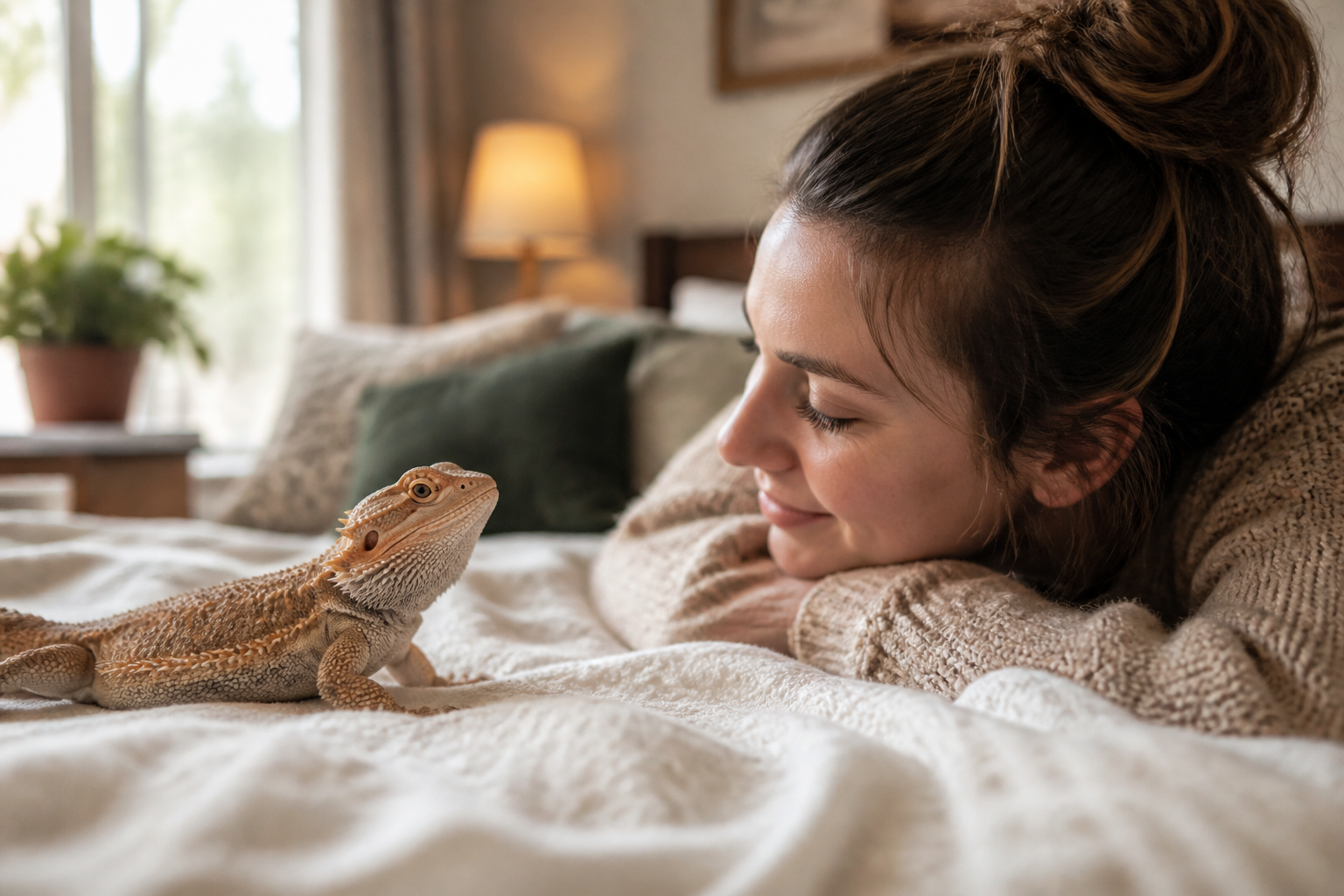

Scaly Travelers: Finding Reptile Friendly Hotels
Traveling With Your Resident Reptile
There is a specific kind of stress that comes with being a reptile parent who loves to travel. When you own a dog or a cat, the path is well trodden. You look for the little paw print icon on a booking site, pay a nightly fee, and move on. But when you are traveling with a bearded dragon, a ball python, or a leopard gecko, that paw print icon does not always apply to you. It can feel isolating and overwhelming to wonder if you will be turned away at the door because your pet has scales instead of fur.
At Pets in the Hood, we understand the emotional weight of this. Your reptile is not just a decoration or a hobby. They are a member of your family, often with a lifespan that spans decades. Leaving them behind with a sitter who might not understand the nuances of heat gradients can be terrifying. Taking them with you is often the safer, more loving choice, but it requires a level of logistical gymnastics that most travelers never have to face. Here is how to navigate the world of hotels and rentals with your cold blooded companions.
The Truth About Pet Friendly Policies
Most major hotel chains define pets as dogs and cats under a certain weight limit. When a website says they are pet friendly, they usually mean they have a floor with easy to clean carpets and a patch of grass out front. Reptiles fall into a gray area. Some managers do not mind a small lizard in a locked tank, while others have strict phobias or corporate mandates against anything that looks like a snake.
I once called a popular mid range chain in Denver to ask about bringing a blue tongued skink. The front desk clerk had to put me on hold for ten minutes to consult the general manager. The result? They allowed it, but only because I explained the animal would stay in a secure, screened enclosure at all times. This is the first rule of reptile travel: never assume. Always call the specific property directly, rather than relying on the national reservation line. Local managers often have the final say on what constitutes a pet.
Choosing Between Hotels and Vacation Rentals
When it comes to reptile travel, not all lodging is created equal. You generally have two main paths: the traditional hotel or a private rental like an Airbnb or Vrbo.
Why Hotels Can Be Tricky
Hotels are convenient for one night stays, but they pose challenges for reptile owners. The biggest issue is electricity and space. A high wattage heat lamp can sometimes trip the older breakers in budget motels. Additionally, housekeeping staff will enter your room daily. If they are not expecting a terrarium, it can lead to unnecessary panic or even a call to animal control in extreme cases. If you stay in a hotel, always use the Do Not Disturb sign and offer to waive daily cleaning services to ensure your pet is not disturbed or accidentally released.
The Advantage of Private Rentals
Vacation rentals are almost always the superior choice for reptile owners. You have more control over the environment and more privacy. Most importantly, you are communicating directly with an individual owner. You can explain that your pet is quiet, stays in a cage, and does not shed fur that triggers allergies.
When messaging an Airbnb host, I find that transparency is the best policy. I usually send a message like this: I am interested in staying at your property. I travel with a small lizard that stays in a secure 20 gallon glass tank at all times. He is silent, odorless, and requires one standard heat lamp. Would you be comfortable hosting us? Most hosts appreciate the honesty and are more likely to say yes to a quiet lizard than a barking dog.
Packing the Portable Habitat
Finding the room is only half the battle. You have to bring the habitat with you. Unless you are traveling in a massive RV, you probably cannot bring a 4 foot by 2 foot wood enclosure. You need a travel setup that is lightweight but functional.
For lizards and snakes, plastic bins with locking lids are a lifesaver. You can drill ventilation holes in the sides and use a small under tank heater or a dimmable heat lamp. Remember to bring a high quality surge protector. You will likely be plugging in a thermostat, a lighting fixture, and perhaps a small humidifier. Never plug these directly into a hotel wall outlet without protection.
One tip we always share at Pets in the Hood is to bring a piece of dark fabric or a towel to drape over the enclosure. Hotel rooms can be bright and noisy, which stresses out reptiles. Covering the tank helps maintain a consistent day and night cycle and keeps your pet from being startled by housekeeping or nearby guests.
Managing the Heat Gradient on the Road
Temperature is the biggest safety concern when staying in a rental. Most hotels keep their rooms at a crisp 68 degrees Fahrenheit to save on cooling costs. For a reptile, this is dangerously cold.
Always bring your own digital thermometers with probes. Do not trust the thermostat on the hotel wall. If the room is too cold, you might need to place your enclosure near a vent or use a space heater (if permitted). Be extremely careful with fire safety. Hotel curtains are often made of flammable materials, so ensure your heat lamps are clamped securely and have plenty of clearance from any fabric.
Understanding the Costs
Be prepared to pay a pet fee, even if your pet never touches the floor. Most hotels charge between 25 and 75 dollars per night as a flat pet rate. Some rentals might ask for a refundable deposit. While it feels frustrating to pay a cleaning fee for an animal that lives in a tank, look at it as insurance. It ensures that if a bulb breaks or a small amount of substrate spills, you are covered and the host remains friendly toward future reptile owners.
Being a Good Ambassador
Every time you stay at a hotel or rental with a reptile, you are an ambassador for the entire community. One bad experience with a loose snake or a messy cricket bin can cause a landlord to ban all non traditional pets forever.
Keep your setup impeccably clean. Use paper towels as substrate during travel to make waste removal easy. If you feed live insects, keep them in a secondary, escape proof container inside a drawer or a closet. There is nothing that ruins a rental relationship faster than a host finding stray dubia roaches in the kitchen a week after you leave.
Traveling with a reptile is not the easiest way to see the world, but it is incredibly rewarding. Whether you are moving across the country or just taking a long weekend in the mountains, your scaly friend deserves a safe place to rest. By doing the legwork ahead of time and communicating clearly with hotel staff and hosts, you can ensure that your next trip is a success for every member of the family.
Enjoying this post?
Get the next one sent straight to your inbox — no spam, unsubscribe anytime.