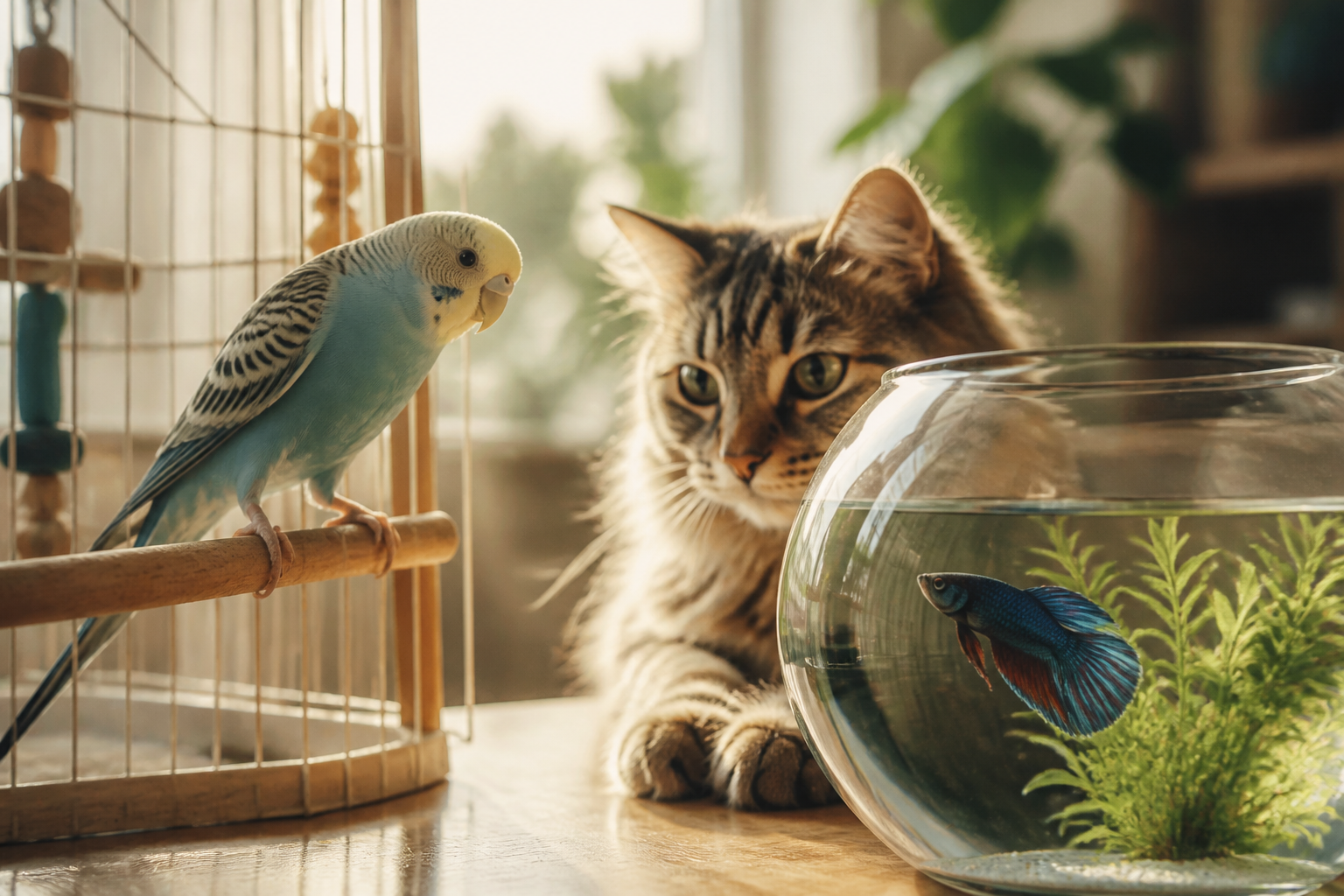

Practical Harmony for Multi Pet Households
Sharing Your Space with Wings and Fins
Welcoming multiple pets into your home is a beautiful commitment that brings a unique kind of energy to your daily life. When you balance the needs of a bird and a community of fish, you are managing two very different ecosystems. It can feel overwhelming to think about the logistics of cleaning, feeding, and enrichment for such diverse species. We understand the emotional weight of wanting every creature to feel equally loved and safe. It is not just about the chores; it is about creating a sanctuary where the chirps and the bubbles blend into a peaceful background track for your life.
In this guide, we will look at the real world logistics of keeping birds and fish. We will tackle the space requirements, the time management tricks, and the safety protocols that keep everyone healthy without burning you out. Whether you have a single parakeet and a nano tank or a large macaw and a basement full of aquariums, these strategies will help you find your rhythm.
The Logic of Layout and Space
The first challenge in a multi pet household is geography. Birds and fish have environmental needs that can sometimes conflict. For example, birds need plenty of flight time and social interaction, while fish need a stable environment free from sudden vibrations or water contamination.
Quarantine and Safety Zones
If you are adding a new bird or a new fish to an existing collection, quarantine is your best friend. For birds, this means a separate room for at least 30 days to ensure no respiratory issues spread. For fish, a simple 10 gallon quarantine tank with a sponge filter can prevent an entire display tank from being wiped out by parasites like Ich. Safety zones also mean physical distance. Never place a bird cage directly above an aquarium. Bird dander, feathers, and dropped food can fall into the water, leading to spikes in ammonia or clogging expensive filtration systems.
Strategic Placement
Consider the noise levels. Some birds, like sun conures or cockatoos, have a high decibel output. While fish do not hear in the same way we do, they are highly sensitive to vibrations. If possible, keep the aquarium in a corner of the room that experiences less foot traffic and is away from the bird cage area. Ensure your aquarium has a tight fitting lid at all times. Birds are curious, and some species, like inquisitive budgies or parakeets, might try to land on the edge of a tank or even try to drink the water. Goldfish and tropical fish are not snacks, and many aquarium water conditioners are not safe for avian consumption.
Mastering the Morning Routine
Logistics are easier when you have a set schedule. In a house with birds and fish, the morning is usually the busiest time. Birds wake up with the sun and expect immediate attention, while fish rely on a consistent light cycle to keep their biological clocks in check.
The First 30 Minutes
Start with the birds. Uncover the cages and refresh the water bowls. Birds are prone to bacterial infections if their water sits for too long, so this is the priority. While the birds are busy with their first meal, turn on the aquarium lights. Automated timers are a lifesaver here. You can buy a reliable power strip timer for under 15 dollars that handles the light cycle for you. This ensures your fish get 8 to 10 hours of light even if you are running late for work.
Feeding Strategy
Feed the fish after the birds have settled. This prevents food cross contamination. If you have any residue from bird pellets or seeds on your hands, wash them thoroughly before touching fish food or reaching into the tank. The oils from bird skin or dust from their feathers can create a film on the water surface which reduces oxygen exchange.
Cleaning Cycles and Air Quality
One of the biggest hurdles in a bird and fish household is air quality. This is where you must be extremely careful. Birds have incredibly sensitive respiratory systems. Many common household cleaners, scented candles, and even non stick cookware fumes can be fatal to them. On the flip side, many aerosol sprays are also toxic to fish if they settle on the water surface.
Safe Cleaning Habits
Use natural cleaners like white vinegar and water for both the outside of the fish tanks and the bird cages. A 50 to 50 mix is effective at cutting through bird droppings and hard water stains on glass. Avoid using glass cleaners that contain ammonia near your birds. If you must deep clean a tank or a cage, move the bird to a different room entirely until the area is dry and the air is clear.
Managing Humidity
Aquariums naturally increase the humidity in a room. For many tropical bird species, like amazons or macaws, this is actually a benefit. However, you must monitor for mold growth. High humidity combined with bird dander can lead to messy corners and potential health risks. Invest in a high quality HEPA air purifier. Place it near the bird cage but not directly next to the fish tank. This will pull dander and dust out of the air before it can settle into your aquarium filter.
The Financial Aspect of Multi Pet Care
Keeping multiple species means double the equipment and potentially double the vet bills. It is important to be realistic about the costs involved. A basic breakdown of monthly supplies for one bird and one mid sized aquarium usually looks like this:
- Bird pellets and fresh produce: 30 to 50 dollars.
- Fish food and water conditioners: 15 to 25 dollars.
- Filter media and replacement parts: 10 to 15 dollars.
- Avian vet savings fund: 25 dollars.
By setting aside roughly 100 dollars a month, you cover the basics. However, you should also have a specialized emergency fund. Avian specialists are more expensive than general vets, often charging 75 to 150 dollars just for a consultation. Fish health is usually managed at home, but medications for a 55 gallon tank can cost 40 dollars or more per treatment cycle.
Entertainment and Enrichment
Both birds and fish require mental stimulation to thrive. For birds, this means foraging toys, puzzles, and time outside the cage. For fish, it means an environment that mimics their natural habitat with plants, caves, and appropriate tank mates.
The Visual Connection
Interestingly, many bird owners report that their pets enjoy watching the fish. A bird safely perched across the room might spend an hour observing the movement in a planted tank. This is a great form of passive enrichment. Just ensure the bird cannot access the tank itself. The movement of the fish provides visual stimulation that can reduce boredom for a lone bird while you are away at work.
Training Sessions
Use your time wisely by combining activities. You can sit near the aquarium while you work on clicker training with your bird. This allows you to monitor the fish for any signs of stress or illness while giving the bird your full attention. Most fish will quickly learn to recognize you and may even swim to the glass when you approach, which is a simple but rewarding form of interaction.
Handling the Unexpected
In a multi pet household, emergencies require a plan. If the power goes out, your fish are at risk due to a lack of oxygen and heat. If there is a fire or a need for evacuation, your bird needs a travel carrier ready at a moments notice.
- Keep a battery powered air pump for your fish tank. These cost about 10 dollars and can save your fish during a blackout.
- Have a go bag for your bird that includes two days of food, a bottle of water, and a towel to cover the carrier.
- List the contact information for both your avian vet and a local fish specialty store on your refrigerator for quick access.
Embracing the Routine
Living with birds and fish is a lifestyle choice that requires a bit more planning than having a single pet. It is about learning the nuances of two different worlds. You will eventually reach a point where the cleaning cycles feel like second nature and the sounds of the household tell you that everyone is doing well. The gentle hum of the filter and the soft whistles of your bird become a symphony of a well managed home. It takes effort, but the reward of seeing these two very different types of creatures thrive under your care is worth every minute of the work. You are providing a high quality life for animals that depend entirely on your diligence, and that is a significant achievement.
Enjoying this post?
Get the next one sent straight to your inbox — no spam, unsubscribe anytime.