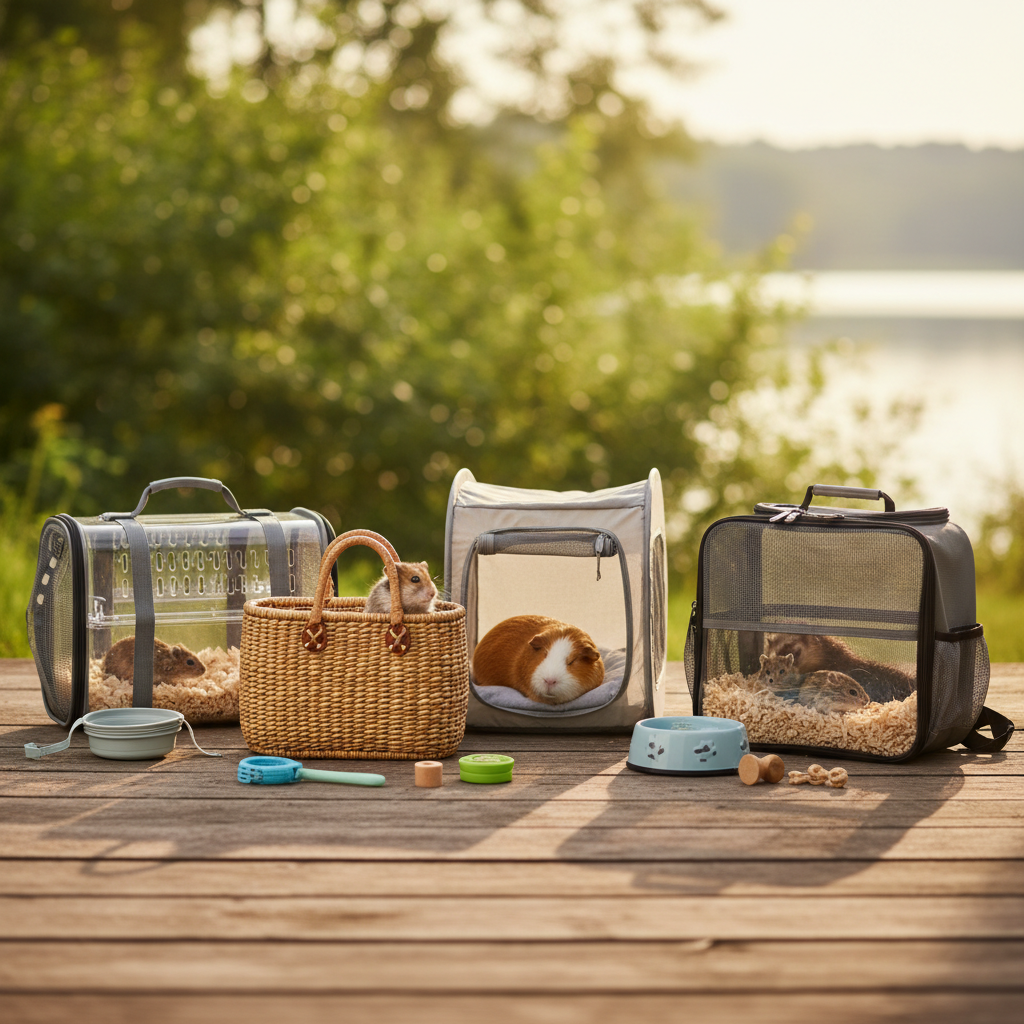

Portable Habitats for Small Mammals: A Buyer's Guide for Travelers
Portable Habitats for Small Mammals: A Buyer's Guide for Travelers
Imagine you are planning a cross-country move or a long-awaited vacation, and your guinea pig, Theo, is peering up at you from his cage with twitching whiskers. For many small mammal owners, the idea of leaving a beloved pet behind with a sitter is a non-starter. However, the logistical challenge of moving a fragile creature from point A to point B can be daunting. Unlike dogs or cats, small mammals like hamsters, rabbits, and ferrets have unique metabolic needs, temperature sensitivities, and an instinctive need for security. Choosing the right portable habitat is the difference between a high-stress ordeal and a seamless journey.
Traveling with a small pet requires more than just a box with air holes. Modern portable habitats are designed to balance ventilation, durability, and ease of access. Whether you are navigating a bustling airport or embarking on a twelve-hour road trip, your choice of gear will dictate your pet's health and happiness. This guide explores everything you need to know to select the perfect mobile home for your small furry friend.
Understanding the Basics of Travel Habitats
A travel habitat is not a permanent cage. Its primary purpose is safety and containment during transit. While a standard home cage might be massive and airy, a travel habitat should be compact enough to prevent the animal from being tossed around during sudden stops, yet spacious enough for them to turn around and lie down comfortably.
Many people find that the most common mistake is prioritizing size over security. In a car accident or even hard braking, a large, open cage allows a small animal to gain momentum before hitting a wall. A snugger, well-padded environment acts more like a protective cocoon. When shopping, look for materials that are chew-resistant. Hard-sided plastic carriers are generally the gold standard for rodents who can make short work of mesh or fabric.
Key Features to Look For
When evaluating a portable habitat, several non-negotiable features should be on your checklist. First and foremost is ventilation. Small mammals are highly susceptible to respiratory infections and heatstroke. Ensure the carrier has multiple points of airflow, preferably on at least three sides. However, these openings should be narrow enough that a determined hamster cannot squeeze through or get their nose stuck.
Security latches are another critical component. Many small mammals are surprisingly adept at manipulating simple sliding doors. Look for habitats with locking mechanisms or double-latches. If you are traveling by air, you will need a habitat that meets specific airline requirements, which often include a metal door and screw-bolted sides rather than plastic clips.
Consider the "flooring" of the habitat as well. A solid, non-slip bottom is essential. Wire-bottom cages are dangerous for travel as they can cause foot injuries if the carrier is jolted. Look for models with a deep base that can hold a thick layer of absorbent bedding to soak up waste and provide a sense of burrowing security.
Material Comparison: Hard Shell vs. Soft Sided
There is an ongoing debate among pet travelers regarding the best material for portable habitats. Each has its place depending on the species and the mode of transport.
Hard-sided plastic carriers are the most durable and easiest to clean. They provide the best protection against external impacts and are excellent for heavy chewers like chinchillas or rats. They also tend to stay cooler in warm environments. The downside is that they can be bulky and may not fit under airplane seats as easily as soft-sided alternatives.
Soft-sided carriers are often preferred for rabbits or larger guinea pigs because they are lightweight and usually feature multiple pockets for storing hay and water bottles. Many are designed to be "expandable," allowing for extra room once you reach your destination. However, these are only suitable for pets that do not have a habit of chewing through fabric. If your pet is a "mega-chewer," a soft-sided carrier could lead to an escape in the middle of a highway.
Species-Specific Considerations
Not all small mammals have the same travel requirements. A habitat that works for a rabbit will be vastly different from one meant for a dwarf hamster.
Rabbits: Bunnies require a carrier that allows them to sit up without their ears touching the top. Because they are prone to spinal injuries, a top-loading carrier is highly recommended. This allows you to lift the rabbit out gently rather than forcing them to walk through a small front door, which can cause them to panic and kick.
Hamsters and Gerbils: These tiny pets need escape-proof habitats. Many people find that small, transportable "critter huts" with thick plastic walls are best. Ensure the water bottle is detached during movement to prevent dripping, which can lead to wet, chilled bedding.
Guinea Pigs: Since guinea pigs are social animals, you may want a carrier large enough for two, as they often travel better when they can cuddle for comfort. They require significant ventilation and a very thick layer of hay to keep them occupied and fed during the trip.
Ferrets: Ferrets are the escape artists of the pet world. Any travel habitat for a ferret must have a high-security lock. They also benefit from a carrier that can accommodate a small hammock, as they prefer to sleep off the floor while moving.
Preparing the Habitat for the Journey
Buying the right habitat is only half the battle; how you set it up matters just as much. Imagine your pet's internal state: they are in a vibrating machine, surrounded by strange smells and sounds. To mitigate this, "pre-scent" the habitat. Place a piece of your old t-shirt or some soiled bedding from their home cage into the travel habitat a few days before the trip. This familiar scent acts as a natural sedative.
Hydration is a major concern. Traditional water bottles often leak due to the vibration of a car or changes in air pressure on a plane. This leaves the pet's bedding soaked and the pet thirsty. Instead, many experienced travelers offer water-rich vegetables like cucumber or romaine lettuce during the journey. If you are traveling for more than four hours, plan for scheduled stops to offer a water bottle manually while the vehicle is stationary.
Airline Travel with Small Mammals
Flying with a small mammal is significantly more complex than driving. First, research which airlines even allow "pocket pets" in the cabin; many only allow dogs and cats. If you find an airline that permits them, you must adhere to strict IATA (International Air Transport Association) regulations.
Your portable habitat must be leak-proof and ventilated on at least two or three sides. Most airlines require the pet to stay in the carrier under the seat in front of you for the duration of the flight. This means you need a low-profile habitat. It is also wise to attach a "Live Animal" sticker to the habitat, along with your contact information and a brief care sheet, just in case of an emergency.
Research shows that most airlines require a health certificate from a vet issued within ten days of travel. Always call the airline directly after booking your ticket to confirm your pet's "reservation," as most flights have a limit on the number of animals allowed in the cabin.
The Role of Temperature Control
Small mammals have a very narrow range of temperature tolerance. A car can heat up to dangerous levels in minutes, even on a mild day. When selecting a portable habitat, consider how it interacts with the environment. Dark-colored plastics absorb more heat than lighter colors.
In the winter, a fabric cover can be placed over the habitat to block cold drafts, but you must leave one side open for air. Some travelers use microwaveable heat pads or chilled gel packs wrapped in towels placed outside the habitat to regulate the internal temperature. Never place a heating or cooling element directly in contact with your pet inside a cramped travel habitat, as they may not be able to move away from it if they become too hot or cold.
Key Takeaways for Pet Travelers
- Safety over size: Choose a habitat that is snug enough to prevent injury during sudden movements but large enough for the pet to turn around.
- Ventilation is vital: Ensure at least three sides of the habitat allow for airflow to prevent overheating and respiratory distress.
- Chew-proof materials: For rodents, hard plastic or metal is superior to fabric or thin mesh.
- Secure latching: Invest in a habitat with locking mechanisms or use zip-ties as a secondary backup for doors.
- Familiar scents: Use old bedding or a piece of cloth with your scent to reduce travel-related anxiety.
- Hydration strategy: Use high-moisture snacks like cucumbers during transit to avoid the mess and unreliability of leaking water bottles.
- Species specifics: Tailor the habitat choice to your pet's specific behavior, such as a top-loading door for rabbits or extra-secure locks for ferrets.
Long-Distance Road Trip Tips
If you are on the road for several days, your portable habitat will essentially become your pet's bedroom. In this case, it is essential to have a secondary, larger "pop-up" habitat or a folding playpen for when you reach your hotel or campsite. You should never leave a small mammal in their tiny travel carrier for 24 hours straight.
During the drive, place the habitat on the floor of the car behind the front seat or buckled into the back seat. This is generally the most stable part of the vehicle. Avoid placing the carrier in the direct path of AC vents or in the direct sunlight of a window. Periodically check on your pet, but avoid opening the carrier in an unsecure area. A panicked hamster can disappear under a car seat in seconds.
Many people find that playing soft music or white noise can help drown out the startling sounds of sirens or heavy trucks. Consistency is key; try to keep feeding times as close to their normal schedule as possible.
Maintenance and Longevity of Your Gear
A high-quality portable habitat is an investment that should last for years. To ensure its longevity, clean it thoroughly after every trip using pet-safe disinfectants. Avoid harsh chemicals like bleach, which can linger in the porous plastic and irritate a small mammal's sensitive nose.
Inspect the habitat before every use. Check for cracks in the plastic, frayed mesh, or hinges that have become loose. If your pet has managed to chew a significant portion of the interior, it is time to replace the unit. A compromised habitat is no longer a safe habitat.
Final Thoughts on Choosing Your Habitat
Selecting the right portable habitat is an act of love. It shows that you value your pet's comfort and safety as much as your own. By taking the time to research species-specific needs, material durability, and ventilation requirements, you are setting the stage for a successful adventure together. Remember that the best habitat is the one that provides peace of mind for you and a stress-free environment for your furry companion.
Ready to hit the road with your small friend? Don't wait until the day of your trip to test out your gear. Order your portable habitat today and start acclamating your pet to their new travel home with treats and short practice runs. With the right preparation and the best equipment, the world is yours to explore together. Safe travels!
Enjoying this post?
Get the next one sent straight to your inbox — no spam, unsubscribe anytime.