
Keeping Your Bird Cool and Safe This Summer
Summer Safety for Our Feathered Friends
Watching a bird enjoy a patch of sunlight is one of the simple joys of being a pet owner. However, as the temperatures climb during the summer months, that same sunlight can quickly become a serious health risk. Birds are incredibly sensitive to temperature changes. Unlike humans, they do not have sweat glands. They rely on respiratory evaporation and behavioral changes to stay cool. When those mechanisms fail, the results can be dangerous.
For many of us with senior birds, this time of year feels particularly heavy. We worry more about their heart health and their ability to regulate their internal thermostat. It is a natural feeling of protective love. The transition into summer requires a shift in how we manage their daily routines, diet, and environment. This guide is designed to give you the practical tools you need to keep your companion comfortable and safe until the autumn breeze returns.
Recognizing the Signs of Overheating and Heatstroke
Knowing what to look for is the first step in prevention. Birds are masters at hiding illness, but heat exhaustion usually shows visible physical markers. A bird that is too hot will often hold its wings away from its body. This is called shrugging or wing drooping. By creating space between the wings and the torso, they allow air to reach the skin under their feathers.
Another major sign is panting or open mouthed breathing. If you see your bird rapidly opening and closing its beak with a pumping motion in the throat, they are in distress. In severe cases of heatstroke, you might notice a bright red flush to the skin around the eyes or on the feet. The bird may appear lethargic, lose its balance, or even fall from its perch. If you see these signs, you must move the bird to a cool environment immediately. Use a fine mist of lukewarm water to dampen their feathers, but never use ice water as this can cause systemic shock.
Hydration and Nutrition During High Heat
Water is the most critical resource during a summer heatwave. On a standard day, a bird might drink a certain amount, but that intake can double when it is hot. You should refresh the water bowl at least three times a day. Warm water is a breeding ground for bacteria, and many birds will refuse to drink if the water feels tepid or slimy.
Consider adding a second water source to the cage. If your bird typically uses a bottle, add a ceramic bowl as well. This provides a backup in case a vacuum seal fails or the ball gets stuck. You can also offer hydrating snacks. While seeds and pellets are the staples, summer is a great time for water rich produce. Small pieces of cucumber, watermelon (without seeds), and leafy greens can provide a boost of moisture. Just remember to remove any uneaten fresh food after two hours to prevent spoilage in the heat.
Protecting the Feet and Managing Outdoor Time
If you take your bird outside in a travel carrier or on a harness, you must be hyper aware of the surfaces they touch. Asphalt, concrete, and even wooden decking can reach temperatures of 140 degrees Fahrenheit when the air temperature is only 85 degrees. If a surface is too hot for the back of your hand to touch for five seconds, it is too hot for your bird to walk on. Hot pavement can cause instant thermal burns to the sensitive scales on a bird's feet.
Limit outdoor excursions to the early morning before 9:00 AM or the late evening after 7:00 PM. Even during these times, keep the bird in the shade. Direct sunlight in a travel carrier can create an oven effect within minutes. Never leave a bird unattended in a car, even with the windows cracked. On a 75 degree day, the interior of a car can reach 100 degrees in ten minutes. This is a fatal scenario for a small animal with a high metabolic rate.
Indoor Cooling Strategies and Home Comfort
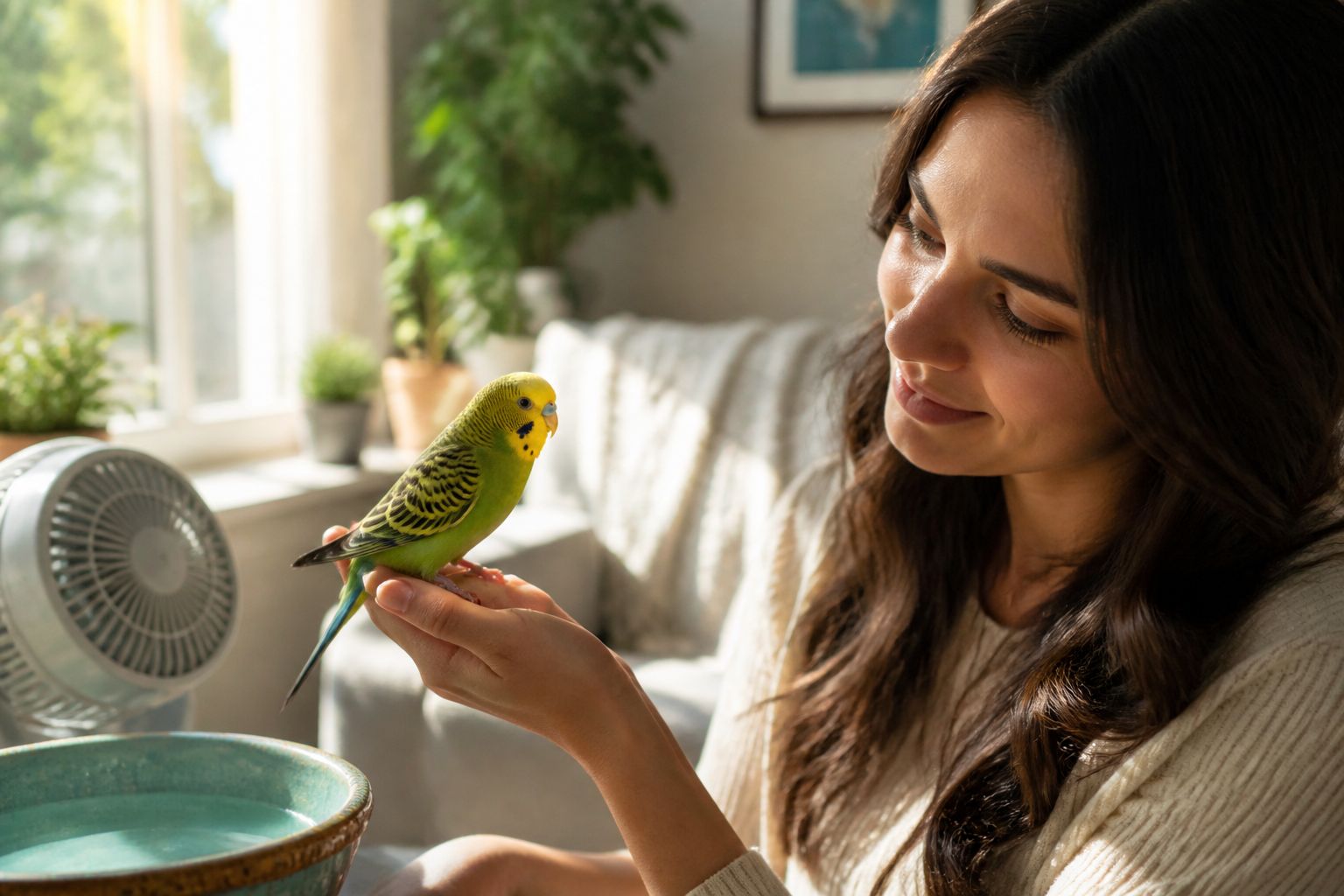
Most of our birds spend their time indoors, but a house can still become uncomfortably warm. Air conditioning is a lifesaver, but you must ensure the bird is not in the direct path of the cold air vent. Draughts can be just as stressful for a bird as the heat itself. Position the cage in a room with good circulation but away from the direct blast of the AC or a high powered fan.
If you do not have air conditioning, use heavy blackout curtains to block the afternoon sun. Misting your bird with a spray bottle is a fantastic way to help them cool down through evaporation. Many birds enjoy a shallow bird bath. Fill a heavy dish with only half an inch of water. Watching them splash around is not only cute, but it is an effective way for them to regulate their body temperature.
Indoor Enrichment When It Is Too Hot to Go Out
On days when the heat index is simply too high to leave the house, your bird still needs mental stimulation. Boredom can lead to feather picking or excessive vocalization. Since you are spending more time inside, use this opportunity for new types of enrichment.
Foraging Activities
Create a foraging box by filling a shallow tray with shredded paper, wooden beads, and hidden bits of dried fruit. This encourages the natural instinct to search for food and keeps their mind busy for hours. You can also wrap their favorite treats in plain white paper so they have to chew through the layer to reach the prize.
New Visual and Auditory Input
Since the windows might be closed to keep the cool air in, your bird might miss the sounds of the neighborhood. Play recordings of nature sounds or soft music. You can also rotate their toys. Removing a toy for two weeks and then reintroducing it makes it feel like a completely new object to the bird. This variety helps offset the lack of outdoor time.
Water Safety and Bathing Habits
Summer is the prime season for baths, but safety should always come first. Always use plain water for misting and bathing. Never add soaps or scents to the water, as these can strip the natural oils from the feathers. If your bird is a fan of the kitchen sink, ensure the faucet is on a very low drip or a gentle spray. Deep water is a drowning risk, so always supervise your bird during water play. After a bath, let the bird air dry in a warm, draft free spot. Do not use a hair dryer, as many contain heating elements coated with polymers that release toxic fumes when hot.
By staying proactive and watching for the subtle cues of discomfort, you can ensure your bird enjoys the season just as much as you do. A little extra shade, a fresh bowl of water, and some indoor fun go a long way in keeping the hood's favorite pets happy and healthy through the peak of summer.
Enjoying this post?
Get the next one sent straight to your inbox — no spam, unsubscribe anytime.