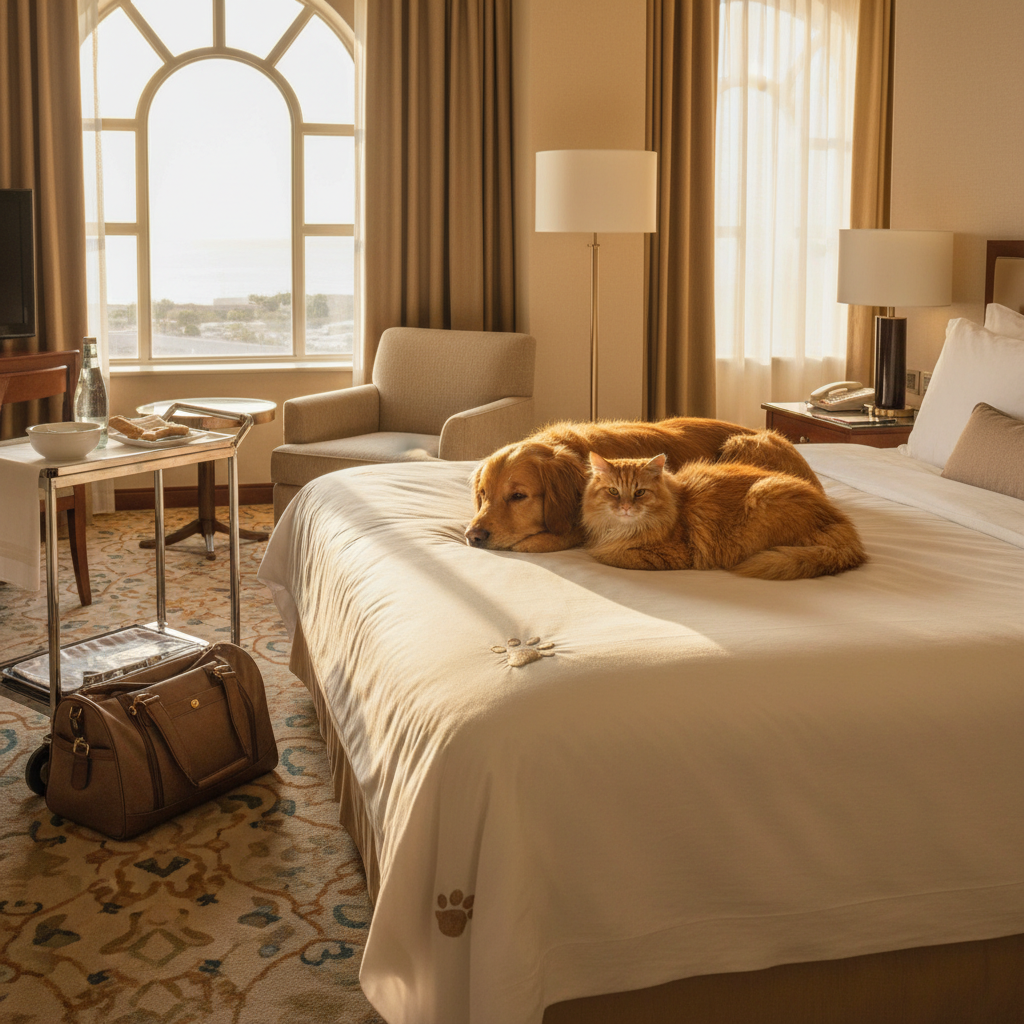

How to Find Truly Pet-Friendly Hotels (Not Just Pet-Tolerant)
A truly pet-friendly hotel is an accommodation that proactively integrates animal companions into the guest experience through welcoming policies, specialized amenities, and staff trained in animal safety. Unlike pet-tolerant hotels, which merely permit animals on the premises often under strict constraints and high fees, a pet-friendly establishment views the pet as a guest in their own right. For travelers with exotic pets or underserved breeds, distinguishing between these two categories is the difference between a stressful stay and a seamless vacation.
Understanding the Difference: Pet-Friendly vs. Pet-Tolerant
To the casual traveler, the term pet-friendly suggests a warm welcome for their four-legged friend. However, in the hospitality industry, this label is often used as a broad marketing term that hides a spectrum of hospitality tiers. A pet-tolerant hotel is one that allows pets under a 'necessary evil' mindset. These locations often impose weight limits (typically 25-50 pounds), breed restrictions, and high non-refundable cleaning fees that can sometimes exceed the daily room rate. In these establishments, you may find yourself restricted to specific 'pet floors' which are often less maintained, or you might be barred from leaving your pet unattended in the room under any circumstances.
On the other hand, a truly pet-friendly hotel treats your pet as a valued member of the family. According to frequent travelers in the pet community, these hotels often provide welcome kits that include treats, waste bags, and bowls. Some even offer 'pet room service' menus or have dedicated concierge staff who can recommend local pet-friendly parks and veterinarians. For owners of exotic pets like ferrets, house rabbits, or reptiles, the distinction is even more critical. A pet-tolerant hotel will almost always say no to anything that isn't a dog or cat, while a truly pet-friendly boutique or luxury chain may be willing to accommodate 'domesticated non-traditional pets' if asked properly.
Recognizing these signs early in the booking process saves time and money. Look for hotels that avoid the word 'permitted' and instead use words like 'welcomed' or 'invited.' If the fine print is buried deep within a PDF of terms and conditions, it is likely a pet-tolerant facility. If the pet policy is highlighted on the main landing page with photos of happy animals, you have likely found a pet-friendly gem.
How to Vet a Hotel Policy Like a Pro
Before clicking the 'book' button, you must peel back the layers of the hotel's advertised policy. Many booking platforms use a simple checkbox for pets, which can be misleading. A hotel might check that box but only allow dogs under 15 pounds. To find the truth, you must look for the specific Pet Policy page on the hotel's official website.
First, examine the fee structure. Research shows that 'pet fees' range significantly across the industry. Some hotels charge a flat fee per stay, while others charge per night, per pet. A truly pet-friendly hotel often keeps fees reasonable or even waives them entirely. If you see a 'non-refundable cleaning deposit' plus a 'nightly pet fee' plus a 'pet damage deposit,' the hotel is likely trying to discourage pet owners from staying there.
Second, scrutinize the weight and breed restrictions. Many national chains have brand-wide policies, but individual franchises often have the power to enforce stricter rules. If you have a large breed dog like a Great Dane or a 'stigmatized' breed like a Pit Bull mix, you must confirm that the 'all dogs weight limit' truly means all dogs. For those traveling with exotics, this is the stage where you look for phrases like 'other pets at management discretion.' This is your green light to start a conversation.
Third, verify the 'unattended' rule. This is the most common point of friction for traveling pet owners. Most hotels officially state that pets cannot be left alone. However, truly pet-friendly hotels may allow the pet to stay in the room alone if they are crated and the front desk has your cell phone number. If a hotel strictly forbids any alone time, you will be unable to go to dinner, visit a museum, or go to the gym during your stay without a pet sitter.
The Art of the 'Pre-Stay' Phone Call
In the digital age, it is tempting to handle everything via email or app, but for pet owners, the phone call is your greatest tool. This is especially true for those with exotic pets like birds or small mammals. When you call, do not ask 'is your hotel pet-friendly?' The answer will always be 'yes' if they allow dogs. Instead, be specific.
When speaking with the front desk or a manager, introduce your pet by name and species. For example: 'I am planning a stay and traveling with my well-behaved, caged house rabbit, Barnaby. I see you allow dogs; does your policy extend to small domestic mammals?' This approach humanizes your pet and makes it harder for a clerk to give a generic 'no.' If you are traveling with a dog, ask about the 'designated pet relief areas.' A pet-tolerant hotel might point you to a small patch of mulch by the parking lot; a pet-friendly hotel will often have a fenced-in dog run or a grassy park nearby.
Another vital question is about the housekeeping schedule. Truly pet-friendly hotels understand that a housekeeper entering a room can startle an animal. Ask if they offer 'pet in room' door hangers or if you can schedule housekeeping for a specific time when you will be out with the animal. If the staff seems confused or annoyed by these questions, it is a clear indicator of a pet-tolerant culture rather than a pet-friendly one.
Scouting for Pet-Centric Amenities
What makes a hotel truly stand out in the pet-friendly category are the amenities that cater to the animal's comfort, not just the owner's convenience. While a 'dog bed' is a nice gesture, high-quality pet-friendly hotels invest in durability and hygiene. Imagine entering a room where there is a specialized waterproof floor runner, a cooling mat for the summer, or even an air purifier to help with dander and odors. These are signs that the hotel has thought deeply about the pet's experience.
Look for hotels that partner with local businesses. This might include a 'Yappy Hour' at the hotel bar where pets are welcome, or discounts at local pet boutiques. Some luxury chains have 'Director of Pet Relations'-often a resident dog or cat-who oversees the pet program. While this may seem like marketing fluff, it usually indicates a staff-wide culture of animal appreciation.
For exotic pet owners, amenities involve infrastructure. Does the room have enough space for a travel cage or terrarium? Are there outlets near a sturdy table for heat lamps or filtration systems? While few hotels provide specialized equipment for reptiles or birds, those that are 'truly friendly' will be happy to accommodate the extra power usage or the need for a quiet corner away from the elevators to reduce stress for sensitive species.
Navigating Fees and Hidden Costs
Budgeting for a pet-inclusive trip requires a clear understanding of the financial landscape. Pet-tolerant hotels often use fees as a revenue stream or a deterrent. In your research, you may find that some hotels charge upwards of fifty dollars per night per pet. For a week-long stay, this can nearly double the cost of your lodging.
A common trap is the 'deep cleaning fee.' While it is reasonable for a hotel to protect its property, this fee should ideally be transparent and justified. Truly pet-friendly hotels often build the cost of standard maintenance into a much smaller, one-time fee. Research shows that guests are more likely to return to a hotel that offers a flat rate rather than a sliding scale based on the pet's weight or breed.
Always ask for a breakdown of the pet charges on your final receipt. Some hotels have been known to add 'incidental' charges for pet hair or minor odors that fall under normal wear and tear. If you are staying in a truly pet-friendly establishment, they expect a certain level of 'pet presence' and won't nickel-and-dime you for a few stray hairs. To protect yourself, take photos of the room's condition upon arrival and departure-a habit that is especially important for those traveling with pets that might be misunderstood, such as parrots or ferrets.
Location and Safety: The External Environment
A hotel room is only one part of the travel experience. A truly pet-friendly hotel is situated in an environment that supports your pet's needs. Before booking, use satellite maps to check the surrounding area. Is there green space within walking distance? Are the sidewalks wide and well-lit? If the hotel is located directly on a busy highway with no grass in sight, it is not pet-friendly in practice, regardless of what the website says.
Safety is the most overlooked aspect of pet-friendly lodging. Check if the hotel rooms have interior or exterior corridors. Professional pet travelers often prefer interior corridors because they provide an extra layer of security; if a pet slips out of the door, they are contained within a hallway rather than being let loose into a parking lot or street. Furthermore, ask if the hotel uses 'pet-safe' cleaning products. Strongly scented chemicals or heavy bleach can be irritating or even toxic to sensitive animals like birds and cats.
Consider the noise levels. A hotel located near an airport or a loud train line might be fine for humans, but the high-frequency sounds can be distressing for many animals. Truly pet-friendly hotels often designate the quietest parts of the building for guests with pets to ensure everyone gets a good night's rest.
Takeaways for Finding Your Next Stay
- Ignore the Icon: Never trust a simple 'pets allowed' icon on a booking site; always verify the full policy on the hotel's direct website.
- Search for Specifics: Look for hotels that mention weight limits, breed restrictions, and fee totals upfront.
- Call the Property: A five-minute phone call to the front desk can reveal a hotel's true attitude toward animals.
- Vet the Surrounding Area: Use Google Maps to ensure there is a safe place for exercise and relief within a short walk.
- Exotic Owners Beware: Always get permission for non-traditional pets in writing via email to avoid being turned away at check-in.
- Review the Vibe: Read recent reviews from other pet owners on specialized travel sites to see if the staff was actually welcoming or just tolerant.
The Pet-Friendly Travel Checklist
Finding a truly pet-friendly hotel is about shifting your perspective from 'where can I bring my pet' to 'where will my pet be treated as a guest.' It requires a bit more research and a few more phone calls, but the effort pays off in a stress-free environment where you don't feel like you are breaking the rules just by existing with your animal companion. By prioritizing establishments that offer clear policies, reasonable fees, and thoughtful amenities, you ensure that your travels with your pet are a joy rather than a chore. Whether you are traveling with a Golden Retriever or a Bearded Dragon, the right hotel is out there-you just have to know what questions to ask. As the pet travel industry continues to grow, more hotels are realizing that being truly pet-friendly isn't just a nice perk; it is a competitive necessity in the modern travel market.
Enjoying this post?
Get the next one sent straight to your inbox — no spam, unsubscribe anytime.