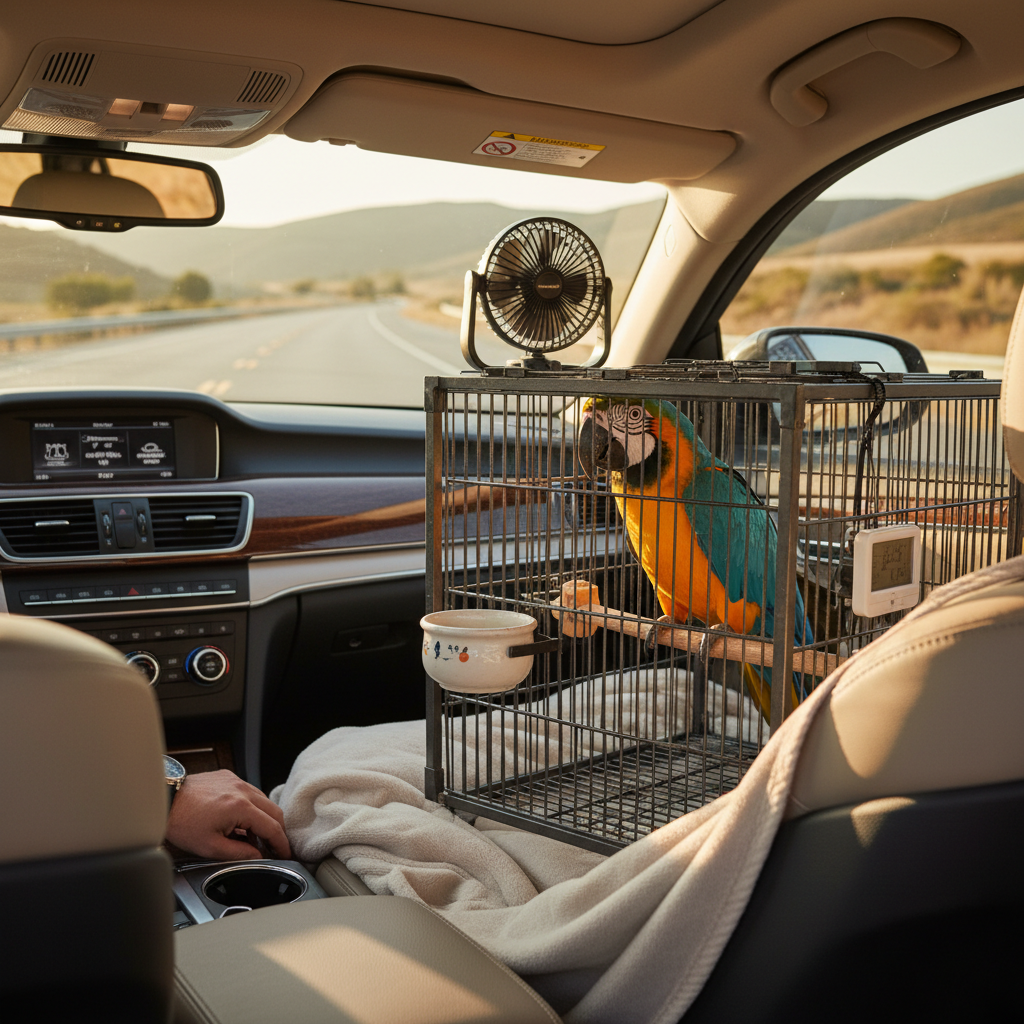

Driving Long Distances with a Parrot: Cage, Climate, and Cabin Setup
Driving long distances with a parrot requires specialized knowledge of avian physiology, stress management, and vehicle safety to ensure a successful journey. Unlike mammals, parrots possess highly sensitive respiratory systems and a unique metabolic rate that makes them vulnerable to rapid temperature fluctuations and airborne toxins common in vehicles. A proper setup involves a combination of a secure travel carrier, strict climate control, and a cabin environment designed to minimize motion sickness and sensory overload. By prioritizing these three pillars-cage, climate, and cabin-bird owners can safely transport their feathered companions across state lines or even across the country without compromising the animal's health.
Choosing the Right Travel Cage for Your Parrot
The foundation of a safe road trip is the travel cage. While your parrot likely lives in a spacious enclosure at home, a travel cage serves a different purpose: security during transit. A travel cage should be small enough to prevent the bird from being tossed around during sudden stops but large enough for the bird to turn around and fully extend its wings. Experts often recommend stainless steel or heavy-duty plastic carriers. Stainless steel provides the best visibility and ventilation, while plastic 'sky kennels' offer a sense of privacy and safety for nervous birds.
When selecting a cage, pay close attention to the bar spacing. It must be narrow enough that the parrot cannot get its head through the bars, which could lead to strangulation during a bump in the road. The door must have a secondary locking mechanism. Many parrots are adept at manipulating simple latches, and the vibration of a moving car can sometimes loosen a poorly secured door. Using a carabiner or a specialized bird-safe padlock is a common safety precaution among experienced avian travelers.
Inside the cage, the perch setup is critical. A single, low-mounted perch is generally safer than multiple vertical perches. Using a textured perch, such as one made of dragonwood or a rough-surfaced PVC, helps the parrot maintain a firm grip as the car maneuvers through turns. Smooth plastic or dowel perches can become slippery, potentially leading to falls. Avoid hanging heavy toys that could swing and strike the bird; instead, provide soft foot toys or simple foraging items that stay at the bottom of the cage.
Managing the Cabin Environment and Climate Control
Climate control is perhaps the most challenging aspect of driving long distances with a parrot. Parrots are extremely sensitive to drafts and rapid temperature changes. The ideal cabin temperature for most parrots during travel is between 70 and 80 degrees Fahrenheit. It is essential to ensure that the air conditioning or heater vents are never pointed directly at the bird's cage. Direct airflow can lead to rapid dehydration or chilling, both of which can be fatal during a long haul.
Since cars often have 'hot spots' where sunlight hits the glass, place the cage in a location that receives consistent shade. Many travelers use window shades or even a light, breathable cotton sheet to cover part of the cage. This not only protects the bird from direct UV rays and heat but also reduces visual stimulation from passing cars and changing landscapes, which can be a significant source of stress.
Air quality is the second half of the climate equation. A car's cabin can accumulate fumes from the engine, road exhaust, or even the off-gassing of interior plastics. Parrots have a high oxygen demand and an incredibly efficient respiratory system, meaning they inhale toxins much faster than humans do. Never smoke in the car, and avoid using scented air fresheners, perfumes, or heavy cleaning agents. Many bird owners invest in a portable HEPA air purifier that plugs into the car's 12V outlet to ensure the air remains free of particulate matter and VOCs during the drive.
The Ideal Cabin Setup for Stability and Safety
Where you place the cage in the vehicle can determine the bird's comfort level and safety in the event of an accident. The safest location for a parrot cage is on the floorboard behind the front passenger seat, provided there is adequate ventilation. This position low in the vehicle minimizes the 'swing' felt during turns and keeps the cage away from the potential impact of passenger-side airbags. If the cage must be placed on a seat, it should be secured firmly using seatbelts or heavy-duty bungee cords to prevent it from sliding or tipping.
Consider the bird's view when finalizing the cabin setup. While some parrots enjoy watching the world go by, many are terrified by the 'predator-like' movement of tall trucks or overpasses appearing suddenly above them. Facing the cage sideways (with the bird's perch perpendicular to the direction of travel) can help reduce motion sickness. If your bird shows signs of distress-such as panting, wing-flipping, or repetitive vocalization-covering three sides of the cage can provide a needed sense of security.
Sound management is also part of the cabin setup. While some birds enjoy soft music or the sound of their owner's voice, the constant roar of highway traffic can be exhausting. Keeping the windows closed to reduce wind noise or playing 'white noise' inside the cabin can help keep a bird calm. Imagine the difference between a loud, chaotic environment and a controlled, hushed space; for a parrot, that difference is the key to a stress-free journey.
Hydration and Nutrition on the Road
Maintaining hydration is one of the most difficult tasks during a long road trip. Most parrots will not drink from a traditional water bowl while the car is in motion because the water splashes and creates a mess. This can lead to dehydration over 8 to 12 hours of driving. To solve this, many owners transition their birds to a water bottle (lixit style) several weeks before the trip. If your bird does not use a bottle, you must make frequent stops-every two to three hours-to offer fresh water from a bowl while the engine is off.
Dietary consistency is vital. Traveling is not the time to introduce new foods. Stick to the parrot's regular pellet or seed mix, but supplement with high-moisture foods like cucumber, apple slices, or grapes. These snacks provide both nutrition and hydration. Be mindful of food spoilage in a warm car; any fresh produce should be removed and replaced every few hours to prevent bacterial growth. Keep a 'travel kit' handy with pre-measured portions of food to make refills easy at rest stops.
It is also helpful to consider the timing of meals. Some birds experience motion sickness if they eat a heavy meal right before a long stretch of highway driving. Offering a smaller breakfast and allowing the bird to 'forage' on lighter snacks throughout the day can help mitigate nausea. If your bird is known to be prone to motion sickness, consult with an avian veterinarian about safe, bird-specific solutions before departing.
Emergency Preparedness and Documentation
When traveling long distances, you must be prepared for the unexpected. This includes carrying a 'birdie first aid kit' and all necessary documentation. Your first aid kit should at least include styptic powder (to stop bleeding from broken blood feathers or nails), sterile gauze, vet wrap, a disinfectant like chlorhexidine, and a towel for safe handling. Knowing how to use these items is just as important as having them, so a quick review of avian first aid basics before the trip is highly recommended.
Documentation is particularly important if you are crossing state lines. While many states do not have strict border checks for pet birds, others may require a recent Certificate of Veterinary Inspection (CVI). Furthermore, if your parrot is a species protected under CITES (the Convention on International Trade in Endangered Species of Wild Fauna and Flora), you should carry proof of legal ownership. Keep a digital and physical copy of your bird's most recent health records, your veterinarian's contact information, and a list of emergency avian clinics along your route.
Microchipping or leg-banding is another layer of security. In the unlikely event that a bird escapes during a rest stop, having a permanent form of identification significantly increases the chances of a safe return. Photos of your bird from various angles should also be stored on your phone to help with identification if needed. Being over-prepared is the hallmark of a responsible exotic pet owner.
Takeaways for a Successful Parrot Road Trip
- Cage Security: Use a dedicated travel cage with narrow bar spacing and a secondary lock; keep perches low and textured.
- Climate Control: Maintain a cabin temperature between 70-80°F and keep the bird away from direct vents and sunlight.
- Air Quality: Ensure the car is free of smoke, perfumes, and heavy chemicals; use a HEPA filter if possible.
- Setup Location: Place the cage on the floorboard or secure it with seatbelts to minimize motion and maximize safety.
- Hydration: Offer high-moisture fruits or use a drip-style water bottle to prevent dehydration during long stretches of driving.
- Paperwork: Carry a health certificate, ownership records, and a list of avian vets located along your planned route.
Traveling with a parrot is a rewarding way to share your life with your companion, provided you take the necessary precautions. By focusing on a stable cage, a controlled climate, and a thoughtful cabin setup, you can transform a potentially stressful event into a smooth adventure. Remember that every bird is an individual; pay close attention to your parrot's body language throughout the drive to adjust the environment as needed. Safe travels start with a well-prepared cabin and a commitment to your bird's unique needs.
Enjoying this post?
Get the next one sent straight to your inbox — no spam, unsubscribe anytime.