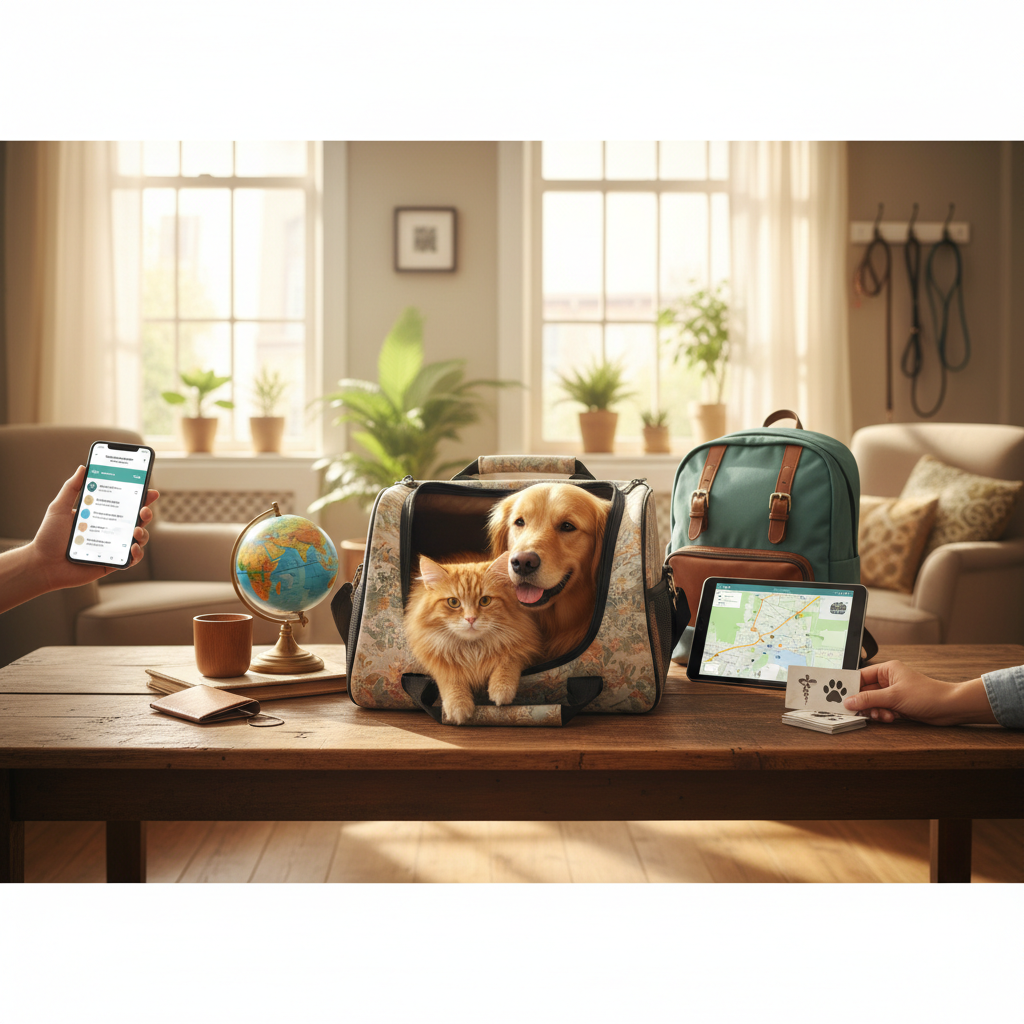

Building a Travel Pet Care Circle: Friends, Sitters, and Backup Vets
A travel pet care circle is a pre-established network of trusted individuals and professionals who provide redundant layers of support for a pet while the owner is away. For owners of exotic animals, birds, reptiles, and small mammals, this circle is the fundamental safety net that ensures specialized care requirements - such as precise humidity levels, light cycles, or live feeding - are maintained even if a primary caregiver becomes unavailable. Unlike traditional boarding, a care circle integrates friends, professional specialty sitters, and emergency veterinary contacts into a cohesive, documented plan designed to mitigate the unique risks associated with traveling without your non-traditional companion.
The Importance of a Specialized Care Network
When most people think of pet sitting, they imagine a neighbor dropping by to fill a bowl of kibble or take a dog for a walk. However, for those in the 'Pets in the Hood' community, the stakes are significantly higher. Managing a bioactive terrarium or an aging parrot involves a level of technical skill that the average person may not possess. Building a circle ensures that you are not relying on a single point of failure.
Establishing this network allows for peace of mind. Many pet owners experience 'travel guilt' or anxiety when leaving behind animals that require specific environmental parameters. By diversifying who is involved in your pet's life, you create a system of checks and balances. For example, a friend might be the primary daily visitor, while a professional sitter remains on call for troubleshooting complex equipment. This tiered approach is the gold standard for responsible exotic pet ownership during travel.
Identifying the Core Members of Your Circle
The first step in building your circle is identifying specialized talent. For exotic pets, you cannot simply use a generic app to find a sitter. You need people who speak the language of your specific species.
The Enthusiast Friend
Look for friends who have expressed a genuine interest in your pet's habitat or behavior. This person doesn't necessarily need to be an expert, but they must be observant and reliable. These individuals are perfect for secondary roles, such as performing visual health checks or refreshing water. Because they know you personally, they are often more attuned to 'off' behaviors that a stranger might miss.
The Professional Specialty Sitter
A professional sitter with experience in exotics is the backbone of your circle. When interviewing potential sitters, ask specific questions about their experience with your animal's order or family. Research shows that specialized pet sitters often carry their own liability insurance, which provides an extra layer of protection for your home and your pet. Many people find that paying a premium for a sitter who understands heat gradients and UVB bulb lifespans is worth the investment to avoid catastrophic errors.
The Community Backup
Consider joining local hobbyist groups or breed-specific forums. Often, members of these communities are willing to act as an emergency backup. If your primary sitter gets a flat tire or falls ill, having a fellow hobbyist who lives nearby can be a lifesaver. This 'peer-to-peer' support is common in the reptile and avian communities, where specific knowledge is a shared currency.
Training and Onboarding Your Care Team
Never assume that even the most experienced sitter knows your specific setup. Every enclosure has its quirks. Training is not just about showing someone where the food is; it is about transferring the 'intuition' you have developed over years of care.
The Walkthrough Ritual
Conduct a minimum of two walkthroughs with any new circle member. During the first session, let them observe you performing the routine. During the second session, have them perform the tasks while you watch. This hands-on approach identifies potential misunderstandings immediately. For instance, you might realize they are uncomfortable handling frozen-thawed feeders or that they struggle with a specific locking mechanism on a birdcage.
The Visual Care Manual
Create a physical and digital manual that includes photos of what 'normal' looks like. If your turtle usually basks at 2:00 PM, include a photo of that. If your bearded dragon's salad should be chopped to a specific size, include a reference photo next to a coin for scale. Documentation should include:
- Daily schedules and lighting timers
- Precise diet measurements and supplement schedules
- Behavior 'red flags' specific to your pet
- Instructions for power outages or HVAC failures
- Location of all cleaning supplies and spare bulbs
The Role of the Backup Vet
One of the most overlooked aspects of a travel pet care circle is the veterinary connection. Your primary vet is likely already in your phone, but what happens if they are closed or fully booked when an emergency strikes?
Mapping Emergency Clinics
In many regions, emergency 24-hour clinics do not always have an 'exotics' vet on staff. You must identify which clinics in a 50-mile radius are capable of treating your specific species at 3:00 AM on a Sunday. According to recent surveys within the veterinary community, the availability of avian and exotic specialists during 'off-hours' is significantly lower than for cats and dogs. Therefore, having a list of three potential clinics is necessary.
Letters of Authorization
Before you leave, provide your primary vet and your backup clinics with a 'Letter of Authorization for Treatment.' This document should state that your sitter has the authority to seek medical care and should include a financial 'cap' or a method of payment. Many clinics allow you to keep a credit card on file for this specific purpose. This eliminates the delay that occurs when a vet has to wait for an owner to pick up a phone in a different time zone.
Creating Redundancy with Technology
While humans are the heart of the care circle, technology acts as the nervous system. Smart home devices can provide real-time data to both you and your circle members.
- Remote Cameras: WiFi-enabled cameras allow you to check in without bothering your sitter. If you notice something concerning, you can alert your circle immediately.
- Smart Thermometers: For reptiles and amphibians, a sensor that sends an alert to your phone when temperatures drop below a certain threshold is vital. You can then contact your local circle member to check the heat lamps before a dangerous situation develops.
- Shared Apps: Use shared calendar apps or task-management tools to track when your sitter has checked in. This provides a digital 'paper trail' and ensures that no visits are accidentally skipped.
Assessing Risks: What Could Go Wrong?
To build a truly resilient care circle, you must engage in 'pre-mortem' thinking. Imagine the worst-case scenarios and build the solution into your circle's protocols.
Imagine a scenario where a severe storm knocks out power to your neighborhood. Your friend lives across town and cannot reach your house due to downed trees. Your professional sitter, however, has a four-wheel-drive vehicle and is tasked as the 'inclement weather backup.' By assigning roles based on capabilities, you ensure the pet remains safe.
Similarly, consider the 'lost pet' scenario. Does your circle know which doors must remain closed at all times? Do they have the number for a local 'lost bird' recovery group? These 'what ifs' should be discussed openly during the onboarding process.
Ethical Considerations and Reciprocity
Maintaining a care circle is a two-way street, especially when friends and fellow hobbyists are involved. Reciprocity is the fuel that keeps these networks running.
If a friend watches your pet, offer to watch theirs in return, or provide some other form of meaningful thanks. If you are using a professional, remember that they are a small business owner. Treat them with respect, pay them promptly, and provide a clear tip if they go above and beyond - such as cleaning up an unexpected mess or dealing with a minor equipment repair. A well-treated sitter is much more likely to prioritize you when you need a last-minute favor.
Circle Maintenance: Keeping it Fresh
A pet care circle is not a 'set it and forget it' system. People move away, jobs change, and vets retire.
Review your circle every six months. Call the clinics on your list to ensure they still see your species. Check in with your backup sitters to see if they are still available for the coming season. This bi-annual audit ensures that when you finally book that dream vacation, your support system is ready to activate at a moment's notice.
Key Takeaways for Building Your Circle
- Diversity is Key: Don't rely on just one person; mix friends, professionals, and peers.
- Onboarding is Crucial: Use double walkthroughs and visual manuals to eliminate guesswork.
- Financial Pre-Planning: Leave authorized payment methods with vets to avoid treatment delays.
- Tech Integration: Use smart sensors to give your circle an early warning system.
- Reciprocity: Nurture your relationships within the circle to ensure long-term reliability.
- Regular Audits: Update your contact list and clinic availability every six months.
Traveling with - or away from - exotic pets requires more than a simple favor from a neighbor. By investing the time to build a robust travel pet care circle, you aren't just protecting your pet; you are protecting your own peace of mind. A well-prepared owner is a relaxed traveler, knowing that their 'hood' has their back, no matter the distance. Start identifying your core team members today so that your next adventure can be worry-free.
Enjoying this post?
Get the next one sent straight to your inbox — no spam, unsubscribe anytime.